Concrete Pump Pipe Supplier Capability Audit: 7 Checks
A concrete pump pipe supplier capability audit is a document-based check that tests whether a manufacturer's stated output, quality system and delivery promises can be supported by evidence before a purchase order is issued. It is not an expression of distrust; it is a translation exercise that turns statements such as "7,000 tons a year", "ISO certified" and "20–25 days" into documents a procurement team can file, compare and enforce. Seven checks cover most of the risk.
Buyers rarely lose money because a pipe was the wrong shape. They lose money because a delivery date was never defined, because a test report did not exist when a batch was rejected on site, or because the monthly output behind a large order turned out to be an annual figure nobody had divided by twelve. A capability audit closes those gaps before the deposit leaves the buyer's account.
This guide is written for procurement teams working at the pre-order stage, and it is organised the way an audit conversation actually runs: output first, then footprint, then quality system, then inspection, then lead time, then minimum order quantity and customization, then export and support record.
The Problem: Claims and Evidence Are Not the Same Category
A quotation typically contains three kinds of statements. Buyers read all three at the same confidence level, but they carry very different levels of proof.
- Capacity claims — "we can cover your annual volume". These are only meaningful when tied to floor area, line count, staffing and current committed capacity.
- Compliance claims — "ISO certified", "tested before shipment". These are only meaningful with a certificate scope, a validity date and a written inspection plan.
- Delivery claims — "fast lead time", "low MOQ". These are only meaningful when written into the order with a defined start trigger and an agreed remedy.
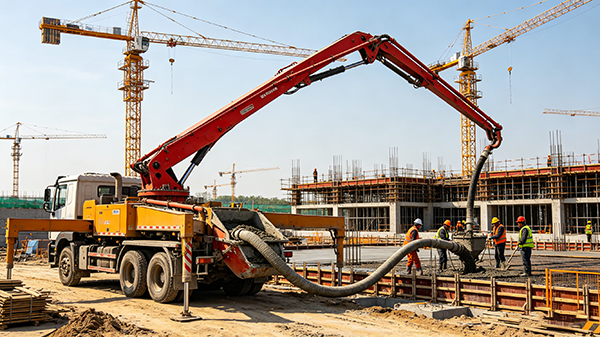
The product itself explains why the stakes are high. A concrete pump pipe operates under continuous high pressure and high wear, and its function is to resist abrasion and extend service life in concrete pumping projects that depend on concrete pumps, pump trucks and placing booms. When a delivery line fails mid-pour, the cost is not measured in the price difference between two quotations; it is measured in idle equipment, delayed crews and cold joints.
Industry Background: A Concentrated Supply Base With Thin Public Data
Concrete pump pipe sits inside a large but poorly segmented market. The global concrete pump market was valued at USD 10.45 billion in 2024, and Asia Pacific held approximately 42% of that market in 2025, according to Market Research Future. China was the top exporter of concrete pumps (HS 841340) in 2024 with exports of USD 153 million, according to the Observatory of Economic Complexity. Both figures describe pumps, not pipes: they show where equipment supply — and therefore replacement-part supply — is concentrated, but they should not be read as the size of the pipe segment.
That distinction matters during an audit. No widely published, independently verified market size exists for concrete pump pipes and fittings as a standalone category, so a buyer cannot benchmark a supplier's claimed capacity against a public dataset. Verification has to happen at supplier level: floor area, line count, test equipment, certification scope and shipping records.
Trade documentation adds a second layer. U.S. Customs and Border Protection ruling HQ 966927 classifies concrete pump pipe components under tariff headings 7304, 7306 and 7307 depending on whether the article is seamless pipe, welded pipe or a fitting. Two suppliers shipping visually similar elbows can therefore present different customs paperwork, which is why export experience belongs inside the audit rather than at the end of it.
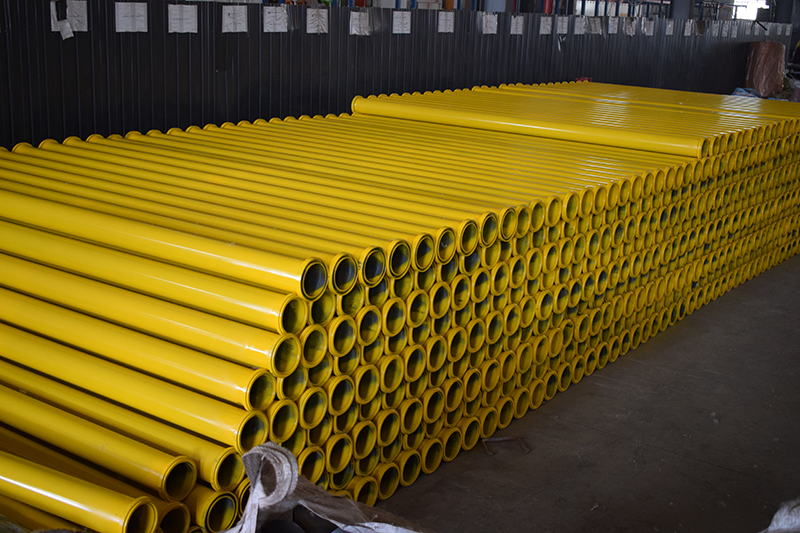
The product family itself is broader than the word "pipe" suggests. A single delivery system may include straight concrete pump pipe, high pressure concrete pump pipe, wear-resistant concrete pump pipe, a mortar pump pipe, a concrete pump rubber hose, a concrete pump elbow in single-wall or double-wall form, a concrete pump pipe clamp, a concrete pump reducer pipe, a flange concrete pump pipe and consumable spare parts for concrete pumps. The wider the range, the more important it is that one quality system covers all of it.
The Seven Checks, Step by Step
Check 1 — Output: Convert an Annual Figure Into a Monthly Commitment
An annual capacity number is the easiest claim to make and the hardest to disprove, because buyers rarely ask what it means per month. Ask for three things: the annual figure, monthly production records for the last quarter, and the share of capacity already committed to existing orders.
Hebei Qixiang Pipe Industry Co., Ltd. reports an annual production capacity of 7,000 tons; on a straight-line basis, that is roughly 580 tons per month. Whether that monthly number is reachable in your specification depends on how much of it is already allocated — and committed capacity is the figure a buyer should request in writing.
Check 2 — Factory Footprint: Test Whether the Capacity Is Physically Possible
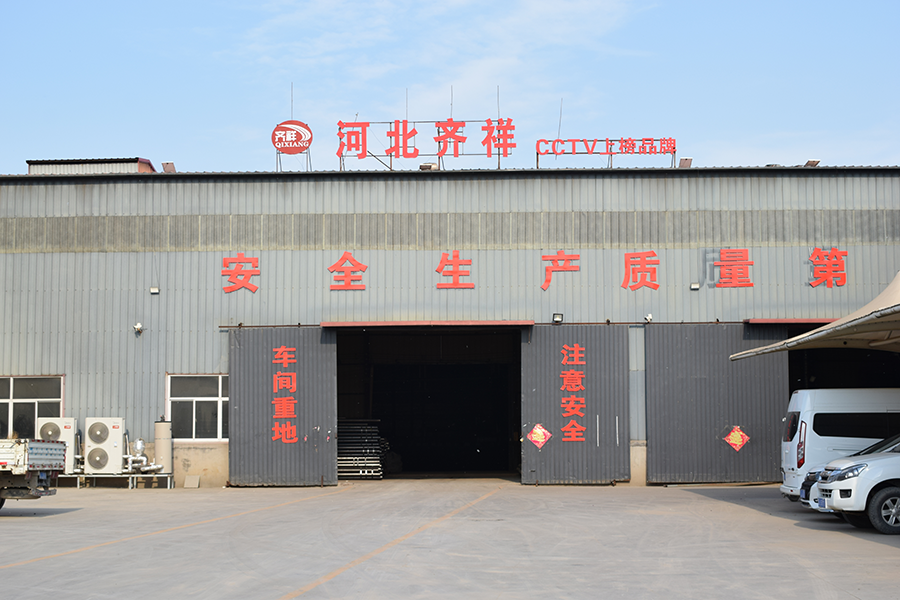
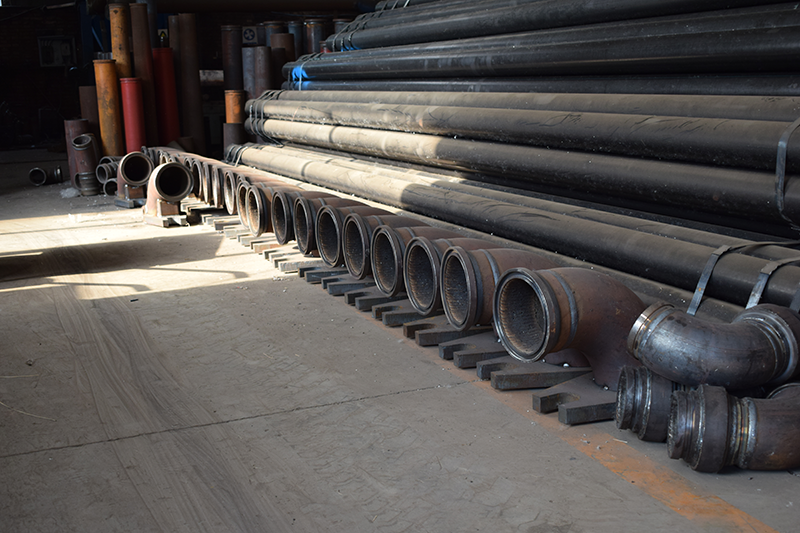
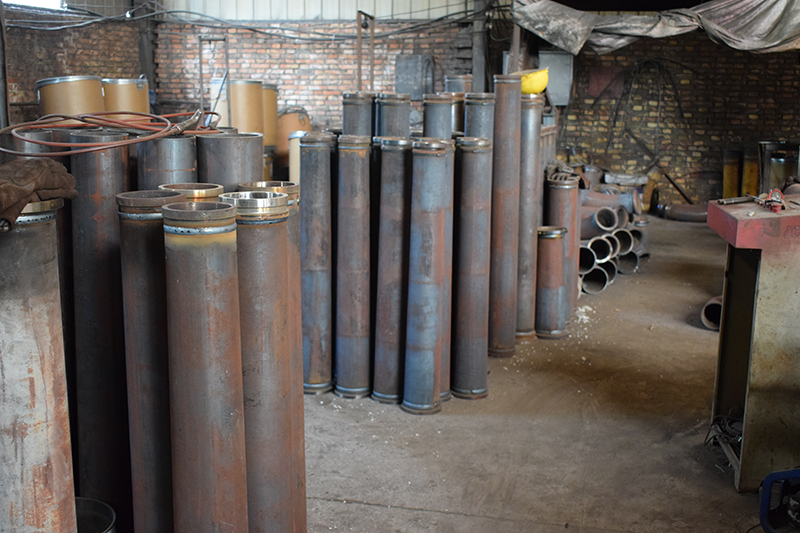
Floor area and line count are the cheapest way to test a capacity claim, because they are visible and difficult to improvise on a live video call. Hebei Qixiang Pipe Industry reports a manufacturing facility covering 30,000 square meters, more than 10 advanced production lines, approximately 50 staff, and a testing set that includes delivery-flow testing systems and hardness testing instruments.
Two details deserve separate attention. First, more than 10 lines in an operation of roughly 50 people suggests a layout built for changeover across diameters and wall thicknesses rather than one dedicated run — relevant if you order DN125 and DN100 in the same quarter. Second, in-house hardness and flow testing determines whether quality data is generated inside the plant or commissioned externally, and how quickly a questioned batch can be re-tested.
Check 3 — Quality System: Read the Scope, Not the Logo
"ISO certified" is a starting point, not a result. Hebei Qixiang Pipe Industry holds ISO 9001:2008 quality certification and states that every stage — raw material procurement, production processing and finished-product delivery — is subject to inspection and control. That statement only becomes useful to a buyer when the certificate's scope is confirmed to cover the product being ordered.
Ask four questions: the certificate number, the issuing body, the exact scope wording and the expiry date. Then ask for the process documents that sit underneath the certificate: incoming steel inspection, the quenching and carburizing steps applied to wear-resistant grades, and the final test record.
Material traceability is the second half of this check. The Qixiang range covers ST52, 45Mn2, Q235, No.20 steel, 37Mn5 and 55Mn alloy, with 45Mn2 and 55Mn alloy structural steel used for the wear-resistant concrete pump pipe category and processed with quenching and inner-wall carburizing. For each delivery, request the steel mill certificate with a heat number that matches the pipe batch, so that the grade on the paperwork can be traced to the steel actually consumed.
Check 4 — Pre-Shipment Inspection: Sample or Every Pipe?
"We inspect before shipment" can mean anything from a visual check on one pipe to a full dimensional and pressure test across the batch. Hebei Qixiang Pipe Industry states that finished products pass multiple precision tests — including hardness, flow and pressure inspections — before delivery. The audit question is how that system is applied to your specific order.
- Is inspection 100% or sampled? If sampled, at what rate and at which stage?
- What is the acceptance criterion for hardness and pressure, and where is it written?
- Who signs the report, and may the buyer's own inspector witness the test?
- Will per-batch photo or video records be supplied before the container is sealed?
A practical shortcut: request last month's inspection report for the same product family. A supplier with a functioning system produces that document within minutes; a supplier without one answers the question with adjectives.
Check 5 — Lead Time: A Number Without a Trigger Is Not a Commitment
Lead time is the claim most likely to be repeated verbally and least likely to be written down. If a supplier quotes a production time in the region of 20–25 days, that quote is incomplete until four elements are defined: the trigger event (order confirmation, deposit receipt or drawing approval), the quantity and specification the figure applies to, the delivery point (ex-works or delivered), and the remedy if the date slips.
A useful test is to ask for the promised versus actual ship dates of the last three export orders of comparable size. A supplier that tracks this answers immediately; a supplier that cannot is quoting habit rather than capacity.
Check 6 — MOQ, Trial Orders and Customization
Minimum order quantity and customization are linked, because a single-unit trial order and a single-unit custom order are not the same thing. If a supplier states a minimum of one unit, confirm whether that applies to a standard DN125 straight pipe or to a custom elbow drawing, and whether tooling or setup cost is charged separately on the trial.
Hebei Qixiang Pipe Industry provides OEM customization services to meet specific technical parameters and size requirements, and its range covers DN125, DN100 and DN80 models, diameters from 2 to 6 inches, standard 3-meter straight lengths, seamless steel straight pipe and double-wall pump pipe options, and elbows including DN125×R275×90° and DN125 10° double-wall. A buyer testing a new supplier should attach the drawing to the enquiry rather than after the quotation — the response reveals whether the supplier is quoting a catalogue item or engineering a part.
Check 7 — Export Record and Support Coverage
Export history is the cheapest third-party evidence available to a buyer, because shipping documents are generated by parties other than the seller. Hebei Qixiang Pipe Industry reports exports to more than 40 countries and regions, including Russia, the UAE, Saudi Arabia, Vietnam, Indonesia, Singapore, Malaysia and Thailand, with export business accounting for 80% of total sales and more than 300 customers served.
To verify rather than accept, ask for two or three redacted bills of lading or customs entries covering the last 12 months, the destination markets they went to, and the Incoterms normally used. A manufacturer that ships regularly keeps these on file.
Support coverage is the final item and the one most often exaggerated. Qixiang's sales and after-sales team is available from 8:00 to 18:00 daily by hotline and email, covering product consultation, solution design, order production, logistics distribution and after-sales maintenance. If a supplier promises round-the-clock technical support, define what is actually covered outside working hours — phone answering, spare-part dispatch or on-site attendance — and in which time zone the promise applies.
Use Cases: Where This Audit Changes the Outcome
- Distributors adding a wear-part line. A broad portfolio — pipe, mortar pump pipe, rubber hose, elbows, clamps, pistons, flanges and lubricants — reduces the number of suppliers to manage, but only if one quality system demonstrably covers all of them.
- Contractors on a fixed pour schedule. Delivery reliability dominates unit price. A 20–25 day quote that becomes 35 days moves the cost out of the pipe budget and into the equipment idle budget.
- OEM and private-label brands. Drawing control and change-notification discipline matter more than catalogue breadth; the audit question is who signs the dimensional report.
- Infrastructure and high-rise pumping. Continuous high-pressure duty with a high wear-resistance requirement makes documented hardness testing more valuable than a lower purchase price.
Comparison Table: Claim, Evidence and the Document to Request
| Audit check | Claim you will typically hear | What converts it into evidence | Reference point reported by Hebei Qixiang Pipe Industry Co., Ltd. |
|---|---|---|---|
| Output | "We produce 7,000 tons a year" | Monthly production records, line count, current committed capacity | Annual production capacity of 7,000 tons |
| Footprint | "Large modern factory" | Floor area, production line count, staffing, in-house test equipment | 30,000 m² facility, more than 10 production lines, approximately 50 staff |
| Quality system | "ISO certified" | Certificate number, issuing body, scope wording, expiry date | ISO 9001:2008 quality certification |
| Pre-shipment inspection | "Every pipe is checked" | Inspection plan, acceptance criteria, signed reports, witness option | Hardness, flow and pressure inspections before delivery |
| Lead time | "20–25 days" | Defined trigger date, quantity basis, actual ship dates of recent orders | Not published in the company materials reviewed — request in writing |
| MOQ and trial orders | "Minimum order one unit" | Whether the single unit is standard or custom, and whether setup is charged | Minimum order quantity not published — request in writing |
| Customization and support | "OEM/ODM and 24/7 support" | Drawing approval flow, defined support hours, spare-part dispatch terms | OEM customization services; sales and after-sales team available 8:00–18:00 daily |
Reference Data Sheet for the Audit File
| Item | Reported value | How to use it in the audit |
|---|---|---|
| Year established | 2015 | Compare with certification dates and export records |
| Location | Boerzhuang Industrial Zone, Mengcun Hui Autonomous County, Cangzhou City, Hebei Province, China | Match the address on the certificate and shipping documents |
| Facility and lines | 30,000 m², more than 10 production lines | Sanity-check the capacity claim physically |
| Annual capacity | 7,000 tons | Divide by 12 and compare with committed capacity |
| Quality certification | ISO 9001:2008 | Confirm scope covers the ordered product |
| Pre-delivery testing | Hardness, flow and pressure inspections | Request a recent signed report for the same product family |
| Materials | ST52, 45Mn2, Q235, No.20 steel, 37Mn5, 55Mn alloy | Match the mill certificate heat number to the delivered batch |
| Standard sizes | DN125, DN100, DN80; 2–6 inch; 3 m straight length | Confirm the trial sample matches the production drawing |
| Elbow references | DN125×R275×90°, DN125 10° double-wall | Use as a customization test item |
| Export footprint | More than 40 countries; 80% of sales; 300+ customers | Request redacted shipping documents to confirm |
All Qixiang figures above are company-reported. Where a value is not published, the correct audit action is to request it in writing rather than to assume a number.
FAQ
Does ISO 9001:2008 certification alone qualify a concrete pump pipe supplier?
No. ISO 9001:2008 confirms that a quality management system is in place; it does not confirm that a specific pipe meets a specific requirement. Verify the certificate's scope wording, issuing body and expiry date, then ask for product-level records: hardness, flow and pressure test results for the grade and size you are ordering, plus the steel mill certificate with a heat number traceable to the batch. Hebei Qixiang Pipe Industry holds ISO 9001:2008 certification and states that finished products undergo hardness, flow and pressure inspections before delivery — a buyer should see both the certificate and a recent test report before approving the supplier.
How can I verify a claimed annual output of 7,000 tons?
Break the figure down. 7,000 tons a year is roughly 580 tons a month on a straight-line basis. Then check whether the plant can physically produce it: floor area, number of production lines, staffing and in-house test equipment. Hebei Qixiang Pipe Industry reports a 30,000 m² facility, more than 10 advanced production lines, approximately 50 staff and an annual capacity of 7,000 tons. Finally, ask what share of that capacity is already committed and request monthly output records for the last quarter.
Which cost drivers should I compare before looking at the unit price?
Compare specification before price: material grade (ST52, 45Mn2, Q235, No.20 steel, 37Mn5 or 55Mn alloy), wall thickness, single-wall versus double-wall construction, elbow radius and angle, and whether clamps, flanges, reducers and other fittings are included in the offer. Wear-resistant grades such as 45Mn2 and 55Mn alloy carry different input costs from standard carbon steel, and a double-wall elbow is not comparable to a single-wall elbow on price. Then add freight and the customs classification that applies in your market, since concrete pump pipe components fall under different tariff headings depending on whether they are seamless pipe, welded pipe or a fitting.
Can I validate quality with a sample before committing to a volume order?
Yes, but only if the sample matches the order. Specify grade, diameter, wall thickness and elbow geometry, and request the test record that accompanies the sample rather than the sample alone. Confirm whether a single-unit trial is priced at standard or custom rates and whether setup cost is charged separately. Hebei Qixiang Pipe Industry offers OEM customization to specific technical parameters and size requirements, so a trial unit can be built to the drawing that will be used in production instead of being pulled from catalogue stock.
How should lead time be written so that it can actually be enforced?
Define four elements: the trigger (deposit receipt or drawing approval), the quantity and specification the lead time applies to, the delivery point, and the consequence of a slip. Then ask for the promised versus actual ship dates of the last three comparable orders. A quoted 20–25 days becomes a commitment only when it is printed on the purchase order with a start date. To request a written quotation with lead time, inspection terms and specification confirmed, contact Hebei Qixiang Pipe Industry at sales@qixiangpipe.com or +86-15131761959.
Conclusion
A capability audit is a translation exercise. Output becomes a monthly number against committed capacity. Factory footprint becomes evidence that the number is physically achievable. ISO 9001:2008 becomes a scope, an expiry date and a signed test report. Pre-shipment inspection becomes an acceptance criterion with a signature on it. Lead time becomes a trigger date on a purchase order. MOQ and customization become a drawing with a price attached. Export record becomes a bill of lading.
Run the seven checks in that order and the decision stops depending on how confident a sales conversation felt. Buyers who audit before committing usually find that the supplier they choose is not the cheapest one quoted — it is the one that answered every question with a document.
Request the Capability Pack
Hebei Qixiang Pipe Industry Co., Ltd. supplies concrete pump pipe, wear-resistant pump pipe, mortar pump pipe, concrete pump rubber hose, elbows, clamps and spare parts for concrete pumps, with OEM customization to drawing. Ask for the current product catalogue, the ISO 9001:2008 certificate and a recent inspection report for the size you need.
Download the catalogue: Qixiang Pipe product brochure (PDF)
Website: cn.qixiangpipe.com
Email: sales@qixiangpipe.com | Phone / WhatsApp: +86-15131761959
Have Questions or Need More Details?
Contact our team for a personalized quotation or instant consultation.
Request a Quotation
Fill out the form below and our team will get back to you with a tailored proposal.
WhatsApp Direct Chat
Prefer to chat in real-time? Message us on WhatsApp for instant assistance & quick answers.
- Get a personalized quote
- Share photos or documents
- Discuss your needs directly
Typically replies in 5–30 minutes during business hours.