A Technical Guide to Selecting Concrete Pump Pipe Elbows: Radius, Angle, and Double-Wall Design
An elbow is the shortest component in a concrete delivery line and, in most pumping operations, the first one to be replaced. Its working life is decided by three specification fields: bending radius (R), angle, and wall construction — single-wall or double-wall. For the mainstream DN125 line, the two reference products in this guide are the DN125×R275×90° concrete pump elbow, where R275 is the bending radius, and the DN125 10° double-wall elbow used to distribute a direction change in small steps.
This technical guide explains how to read those designations, how radius and angle interact with line layout and pressure, when double-wall construction earns its place over a standard single-wall elbow, and how to convert those decisions into a specification string that a manufacturer such as Hebei Qixiang Pipe Industry Co., Ltd. can quote against directly.
Problem Definition: What Actually Fails in a Delivery Line
A concrete delivery line is mostly straight pipe by length, but it can never be laid straight. Every change of direction — at the pump outlet, at the transition from horizontal to vertical, at the placing boom, and at the final drop to the pour point — requires a concrete pump elbow. At that point the abrasive paste and aggregate are forced against the outer wall of the bend, while the joint has to stay pressure-tight through thousands of pumping cycles.
Three failure modes follow from a poorly chosen elbow: localised wall thinning on the outer arc of the bend; a loss of flow performance when the radius is tighter than the line can tolerate; and leakage or joint movement when the flange, clamp and sealing gasket do not match the rest of the pipeline. Because elbows are replaced more frequently than straight sections in most pumping operations, a specification error is not a one-off cost — it repeats every time that position is replaced.
The practical consequence is that elbow selection is a project-scenario decision rather than a catalogue decision. Two DN125 elbows can share the same nominal diameter and still behave differently, because their bending radius, angle and wall construction are different. That is the whole reason the designation string matters more than the diameter alone.
Industry Background: Why Delivery-Line Components Track Pump Demand
Delivery pipes, elbows and fittings are consumables, and consumable demand follows the installed pump fleet. The global concrete pump market was valued at USD 10.45 billion in 2024, and Asia Pacific accounted for approximately 42% of that market in 2025 (Market Research Future). Those figures describe concrete pumps, not the pipe and elbow segment, so they should be read as directional context: a larger installed fleet means more metres of delivery line in service and more replacement components in circulation each year.
Supply is also concentrated. China was reported as the top exporter of concrete pumps under HS 841340 with USD 153 million of exports in 2024 (Observatory of Economic Complexity). For delivery-line hardware, that concentration matters because a large share of global specification practice is written around Chinese-manufactured DN125 pipelines and their accessory interfaces — flanges, clamps, gaskets and hoses that must fit together across brands.
Pipe-level trade data is harder to isolate than equipment data, and there is a reason for it. Concrete pump pipe components are classified under steel pipe and fitting headings rather than a dedicated pump-parts heading: in the United States, straight-length seamless pipes and reducers used with concrete pumping equipment are classified under HS heading 7304, with subheading 7304.39.00 identified in CBP ruling HQ 966927, while welded pipe and fittings fall under separate headings depending on how they are made. Classification depends on construction type, diameter and wall thickness, which is one reason pipe and elbow data is often aggregated rather than reported on its own.
Detailed Solution: The Parameters That Define an Elbow
Reading the designation: DN125 × R275 × 90°
An elbow designation carries three pieces of engineering information. DN125 is the nominal diameter that ties the elbow to a DN125 pipeline. R275 is the bending radius — the radius of the arc the concrete follows through the bend. 90° is the angle through which the flow is redirected. Change any one of the three and you have a different component, with a different footprint, a different flow path and a different wear pattern, even though it still measures DN125 at the flange.
Qixiang's elbow range covers carbon steel elbows, high-wear-resistant elbows, single-wall and double-wall elbows in standard sizes such as DN125R27590° and DN125 10°, plus non-standard customized products for more complex working conditions. Standard straight pipe from the same range is offered in DN125, DN100 and DN80, with diameters from 2 to 6 inches and a 3-metre standard length.
Bending radius (R): the parameter that sets the flow path
Radius is the field most often left blank in an enquiry, and it is the one that decides how the abrasive load is distributed. A longer radius gives the mix a gentler path: the direction change is spread over a longer arc, so abrasion is distributed along the outer wall instead of concentrated at a single point. A shorter radius occupies less space, which matters when the line runs along a placing boom, through a plant room, or inside a confined pour area where the flange-to-flange length is fixed by the equipment.
The selection rule is straightforward. Use the longest radius the mounting space allows, and accept a compact radius only where the layout demands it. For DN125 lines, R275 is the reference radius on the standard 90° elbow supplied by Hebei Qixiang Pipe Industry Co., Ltd.; where a project needs different centreline geometry, elbows are manufactured to non-standard dimensions.
Angle: 90° elbows and low-angle staged deflection
The angle defines how sharply the flow is redirected at that joint, and how many joints the line needs to complete a turn. A 90° elbow handles a full right-angle change in a single component, which is why it is the general-purpose choice at pump outlets, vertical risers and boom transitions. A small-angle elbow such as the DN125 10° double-wall elbow performs the opposite job: it contributes only ten degrees of deflection, so a large direction change is built up from several joints rather than absorbed by one.
The trade-off is easy to state. Staged deflection spreads the direction change along the line so that no single joint takes the full turn, at the cost of more joints, more clamps and more assembly work. Where space allows and the mix is highly abrasive, staged low-angle deflection is usually the more durable arrangement; where the geometry is fixed by the boom or the plant, a 90° elbow is the practical answer. Because available angles depend on the tooling behind them, the angle is also the field where a custom item is worth requesting rather than compromising on geometry.
Single-wall vs. double-wall: when the composite construction earns its place
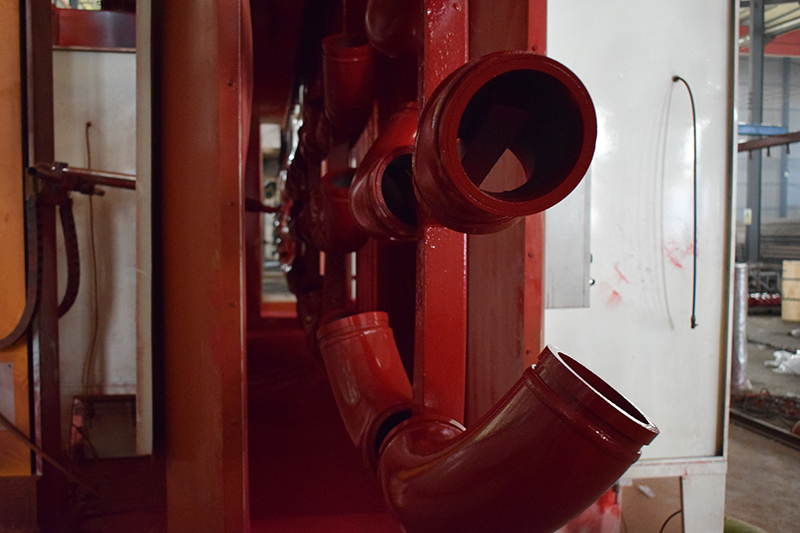
A single-wall elbow uses one steel wall thickness and is the general-duty option for lines where abrasion is moderate. A double-wall elbow combines an inner wear layer with an outer structural wall, so the inner surface can be treated for abrasion resistance while the outer wall carries pressure and mechanical load. In practice, double-wall construction is specified for the positions that are replaced most often — the joints immediately downstream of the pump outlet and immediately upstream of the placing point — because that is where the extra service interval pays back the higher component complexity.
Qixiang manufactures both types. Its standard elbow range includes single-wall and double-wall elbows in sizes such as DN125 R275 90° and DN125 10°, and double-wall pump pipes are also produced as a customized product for buyers who need the same composite logic along a straight run.
Material grade and heat treatment
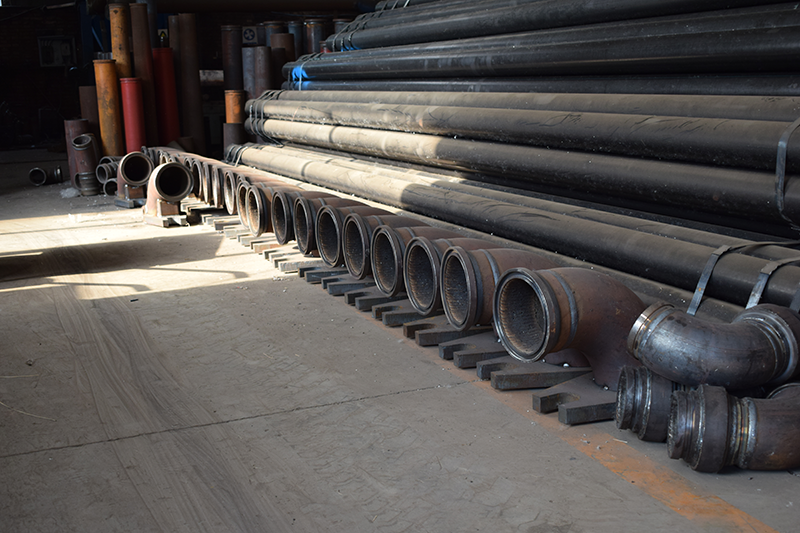
Standard-duty pipe and elbows are produced in grades such as ST52 seamless structural steel, Q235 carbon structural steel, No.20 steel and 37Mn5 alloy steel. Wear-resistant and hardened concrete pump pipes and elbows use 45Mn2 and 55Mn alloy structural steel, processed with quenching and inner-wall carburizing. The purpose of that combination is a hard, abrasion-resistant wetted surface backed by a body that resists impact — the two mechanisms elbows actually experience. A DN125 ST52 seamless delivery pipe for pump truck applications is listed with an 8.1 mm wall thickness example, which gives an idea of the wall section involved on the straight runs that an elbow has to match.
Material grade should be treated as an initial screening field rather than a performance guarantee. A 45Mn2 or 55Mn designation tells you what the manufacturer states is in the part; confirming delivered hardness and the real service interval requires inspection records and application data from your own line. Material designation alone does not establish comparative wear performance.
The parts around the elbow
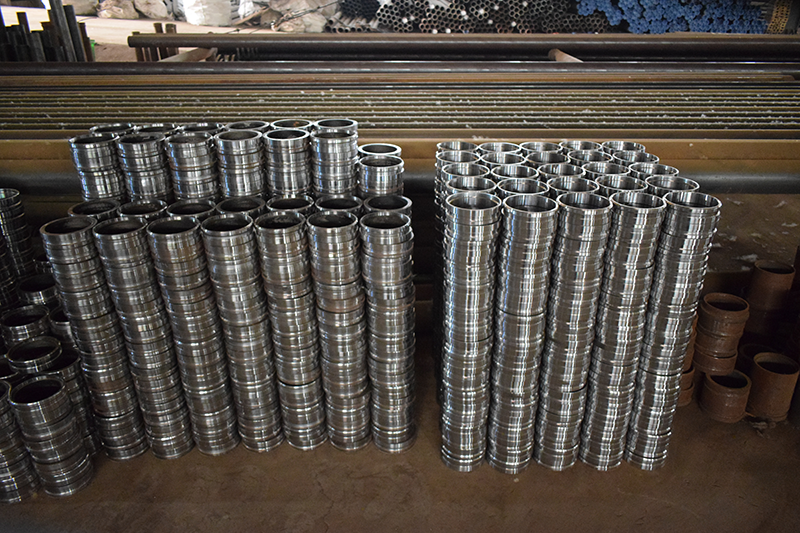
An elbow leaks or survives as part of a joint, not on its own. Flange concrete pump pipe connections, concrete pump pipe clamps and couplings, concrete pump sealing gaskets, and the concrete pump rubber hose that absorbs end-line movement all have to match the same interface. Qixiang supplies these as one-stop spare parts for concrete pump systems, together with cleaning balls, pistons, lubricants, concrete pump reducer pipes and straight concrete pump pipe, which makes it possible to specify a complete heavy duty concrete pump pipe line instead of a single wear part.
Step-by-Step: Matching Elbow Specifications to a Project
- Map the line. Draw the route from the pump outlet to the pour point and mark every direction change. Record the pump type, whether the line runs on a placing boom or as a stationary pipeline, the total delivery distance and the vertical rise.
- Flag the high-wear positions. The joints immediately after the pump outlet, the base of a vertical riser, and the joints immediately before the placing point see the highest pressure and abrasion. These positions justify wear-resistant or double-wall elbows.
- Set the radius by available space. Choose the longest bending radius the mounting geometry allows. Where flange-to-flange length is fixed by the boom or plant layout, accept a compact radius and compensate through material grade and wall construction.
- Set the angle by layout. Use 90° elbows for single direction changes. Where space allows and abrasion is severe, distribute a large turn across several low-angle joints such as DN125 10° double-wall elbows.
- Choose wall construction and material. Single-wall carbon steel elbows for general-duty, lower-abrasion positions; 45Mn2 or 55Mn wear-resistant and double-wall construction for heavy-duty positions in high pressure concrete pump pipe runs.
- Confirm the interface. Check nominal diameter (DN125, DN100, DN80; 2–6 inch range), flange pattern, clamp type and gasket dimensions against the line already in service, so that the new elbow is interchangeable with the parts being replaced.
- Validate with a trial order. Fit one or a few units in the highest-wear position and record the service interval before scaling up. Qixiang accepts a minimum order quantity of 1 unit, so small trial orders are possible.
- Write the RFQ. State diameter, bending radius, angle, wall construction, material grade, quantity, destination and any documentation requirement, so the quotation can be compared line by line.
Use Cases: Where Elbow Choice Changes the Outcome
High-rise and high-pressure pumping
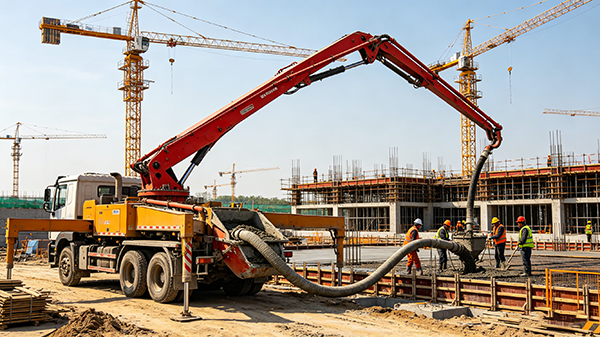
Vertical delivery to upper floors is the condition that punishes an elbow most: continuous high-pressure operation, a demanding wear environment, and no easy access to replace a component mid-pour. In these lines the elbow at the base of the riser and at each direction change carries the heaviest load, and the typical failure is wall thinning on the outer arc. The equipment set matters too — concrete pumps, pump trucks and placing booms impose different flange and clamp interfaces, and the matched equipment has to be confirmed before the elbow specification is fixed.
Long-distance and large-scale infrastructure
Large-scale infrastructure pours keep the line under load for long continuous periods, which multiplies replacement cycles. In one reported application, a concrete pumping service company in the United States ordered 5,000 units for a large-scale infrastructure project and recorded a 50% reduction in pipe replacement frequency compared with standard parts, with wear-resistant material extending service life by around 30%. Those results are application-reported and remain dependent on mix design, pumping pressure and operating practice — but they illustrate why heavy duty components are costed per service interval rather than per unit.
Water conservancy, mining and mortar conveying
Water conservancy and mining work combines abrasive mixes with long horizontal runs, while mortar conveying uses the same delivery-line logic with different flow characteristics. In all three cases the selection sequence is identical: match the radius and angle to the route, then match the material grade to the abrasion level. This is also where a one-stop supply model shortens procurement — elbows, concrete pump pipe fittings, clamps, gaskets and hoses arrive as a matched set rather than as separately sourced parts with uncertain tolerances.
Comparison Table: Elbow Construction Options
| Elbow type | Construction | Positions it suits | Selection note |
|---|---|---|---|
| Standard single-wall concrete pump elbow | Single steel wall, carbon grades such as ST52, Q235, No.20, 37Mn5 | General-duty positions in lower-abrasion lines | Lowest-complexity option; verify radius, angle and flange pattern before ordering |
| Wear-resistant elbow | 45Mn2 or 55Mn alloy structural steel, quenched and inner-wall carburized | High-wear joints: after the pump outlet, before the placing point | Material grade screens candidates; confirm hardness records with each shipment |
| Double-wall elbow (e.g. DN125 10° double-wall) | Inner wear layer plus outer structural wall | Small-angle staged deflection and frequently replaced joints | Composite construction for the positions replaced most often |
| Customized non-standard elbow | Built to project radius, angle and material | Complex working conditions and fixed boom geometry | Requested as an OEM/ODM item where catalogue geometry does not fit |
Parameter Checklist Before You Send an RFQ
| Parameter | What it controls | What to confirm with the supplier |
|---|---|---|
| Nominal diameter (DN125, DN100, DN80) | Compatibility with the pipeline and adjacent fittings | Flange pattern and clamp interface |
| Bending radius (e.g. R275) | Flow path, footprint and wear distribution | Actual centreline radius and flange-to-flange length |
| Angle (90°, 10°, custom) | Number of joints and how the turn is distributed | Whether the angle is a standard size or a custom item |
| Wall construction (single / double) | Trade-off between abrasion resistance and component simplicity | Position in the line it is intended for |
| Material grade (ST52, 45Mn2, Q235, No.20, 37Mn5, 55Mn) | Abrasion and impact behaviour of the wetted surface | Hardness and inspection documentation |
| Joint components (flange, clamp, gasket, hose) | Pressure-tightness of the assembled joint | Matching part numbers across the whole line |
Matching Specifications to the Manufacturer
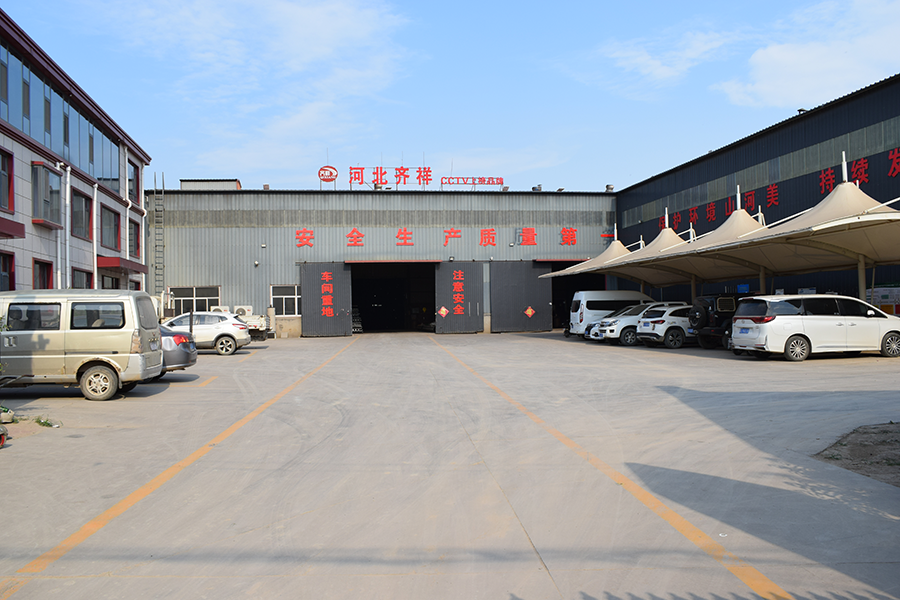
Hebei Qixiang Pipe Industry Co., Ltd. is a concrete pump pipe manufacturer located in Bo Erzhuang Industrial Zone, Mengcun Hui Autonomous County, Cangzhou City, Hebei Province, China, established in 2015. The plant covers more than 30,000 square metres and runs more than 10 production lines for pump truck pipelines, staffed by over 50 skilled production workers, with an annual production capacity of up to 7,000 tons.
The company manufactures concrete pump pipes, mortar pump pipes, wear-resistant pump pipes, concrete pump rubber hoses, elbows and all kinds of spare parts for concrete pumps, with export sales accounting for 80% of output and customers in more than 40 countries. Production is controlled under an ISO 9001:2008 quality management system, with 100% inspection before shipment and hardness, flow and pressure inspections carried out on finished products before delivery. OEM and ODM customization is available for specific technical parameters and dimensions, the standard lead time is 20–25 days, and the minimum order quantity is 1 unit, so small trial orders can be accepted.
FAQ: Concrete Pump Pipe Elbow Selection
What standards and customs rules apply to concrete pump pipe and elbows?
Production quality is normally controlled through a documented quality management system rather than a single global product standard. Hebei Qixiang Pipe Industry manufactures under an ISO 9001:2008 quality management system, with 100% inspection before shipment and hardness, flow and pressure inspections before delivery. On the trade side, classification depends on how the component is made: in the United States, CBP ruling HQ 966927 classified straight-length seamless pipes and reducers used with concrete pumping equipment under HS heading 7304, with subheading 7304.39.00 identified, while welded pipe and fittings fall under separate headings. Because classification depends on construction type, diameter and wall thickness, and because conformity requirements differ by market, confirm the applicable code with your customs broker or the supplier's export team before the order is confirmed.
Can elbows be customised to a specific boom or line layout?
Yes. Qixiang operates as an OEM and ODM supplier, and its elbow range covers carbon steel elbows, high-wear-resistant elbows, single-wall and double-wall elbows in standard sizes such as DN125 R275 90° and DN125 10°, plus non-standard customized products for complex working conditions. Straight pipe is offered in DN125, DN100 and DN80 with diameters from 2 to 6 inches and a standard 3-metre length, and customized seamless steel straight pipes and double-wall pump pipes are produced to order. Customisation covers radius, angle, wall construction and material grade, with ST52, 45Mn2, Q235, No.20, 37Mn5 and 55Mn alloy among the grades in the catalogue.
What drives the price of a concrete pump pipe elbow?
Four variables decide the quotation: the material grade (alloy wear-resistant grades such as 45Mn2 and 55Mn against carbon grades such as Q235 or No.20), the wall construction (single-wall against double-wall), whether the bending radius and angle are standard sizes or custom fabrications, and the order quantity together with the destination market. No public price list applies. The more useful commercial measure is cost per service interval rather than cost per unit, which is why a 5,000-unit application for a U.S. concrete pumping service company reported a 50% reduction in pipe replacement frequency and around 30% longer service life from wear-resistant material. Because the minimum order quantity is 1 unit, the trial cost of validating a specification is small.
Can we test a DN125 elbow before ordering a full quantity?
Yes. Small trial orders are accepted from a minimum of 1 unit, which lets a buyer fit one or two elbows in the highest-wear position of a line and record the service interval before committing to a project quantity. Every unit is inspected 100% before shipment, and finished products pass hardness, flow and pressure inspections before delivery. When requesting a trial part, state the full specification string — diameter, radius, angle, wall construction and material — so that the sample matches the position it will serve.
What is the production lead time, and how do I request a quotation?
Standard production lead time is 20–25 days, supported by an annual production capacity of up to 7,000 tons and more than 10 production lines for pump truck pipelines. To request a quotation, send the specification string — for example “DN125×R275×90°, 45Mn2 wear-resistant, double-wall, 20 units” — together with the destination country to sales@qixiangpipe.com or WhatsApp +86 15131761959. The product catalogue can be downloaded from https://cdn.socialarks.com/sbsp/24801/common/2026/0516/6a0810fa801b4.pdf. The sales and after-sales team is available from 8:00 to 18:00 daily, with 24/7 online support for urgent replacement requirements.
Conclusion: Radius, Angle and Wall Construction Decide the Service Interval
Elbow selection comes down to three readable fields. Read the designation to confirm that DN125×R275×90° means what you think it means — nominal diameter, a 275 mm bending radius and a 90° turn. Set the radius against the space you actually have, and accept a compact radius only where the boom or plant geometry leaves no alternative. Distribute the angle where the layout allows, using low-angle double-wall elbows such as the DN125 10° item to spread a turn across several joints instead of concentrating it in one.
Then decide the wall construction and material by position, not by average: single-wall carbon steel for general-duty joints, and wear-resistant 45Mn2 or 55Mn material with double-wall construction for the joints replaced most often. Confirm the joint interface — flange, clamp, gasket and hose — before the order is placed, because an elbow is only as good as the joint it is bolted into. Specification discipline at this stage is what turns a wear part into a predictable maintenance item.
Next step: specify the elbow, not just the diameter
Send the complete specification string — diameter, bending radius, angle, wall construction, material grade and quantity — to Hebei Qixiang Pipe Industry Co., Ltd. Trial orders from a minimum of 1 unit are accepted, and OEM/ODM customisation is available for non-standard radius, angle and wall construction.
Email: sales@qixiangpipe.com | Hotline: +86-13932706919 | WhatsApp: +86 15131761959 | Website: cn.qixiangpipe.com
Catalogue: Download the Qixiang concrete pump pipe product catalogue (PDF)
Have Questions or Need More Details?
Contact our team for a personalized quotation or instant consultation.
Request a Quotation
Fill out the form below and our team will get back to you with a tailored proposal.
WhatsApp Direct Chat
Prefer to chat in real-time? Message us on WhatsApp for instant assistance & quick answers.
- Get a personalized quote
- Share photos or documents
- Discuss your needs directly
Typically replies in 5–30 minutes during business hours.