
Concrete Pump Pipe Basics: Types, Materials, and Selection Tips
Concrete Pump Pipe Basics: Types, Materials, and Selection Tips
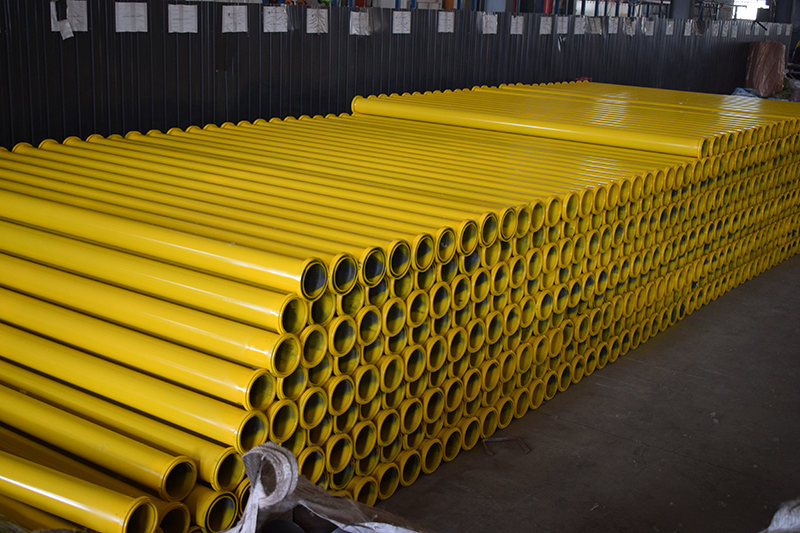
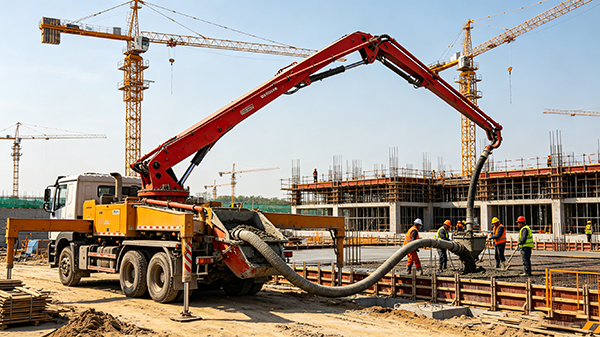
Concrete pump pipes are essential parts of modern concrete conveying systems. Their role is straightforward but demanding: they carry fresh concrete from a concrete pump, pump truck, or placing boom to the exact point where the concrete needs to be placed. Because the pipe line works under high pressure and in contact with abrasive aggregates, it must be strong, wear-resistant, and leak-tight. This article explains what concrete pump pipes are, what types and materials are available, how to think about wear resistance, and what first-time buyers should check before sourcing.
What Is a Concrete Pump Pipe?
A concrete pump pipe is a specialized steel delivery line used in the construction machinery industry. It is built for high-pressure concrete transport and is commonly installed between the pumping unit and the placement hose or boom. Hebei Qixiang Pipe Industry Co., Ltd., a professional manufacturer based in Mengcun Hui Autonomous County, Cangzhou City, Hebei Province, supplies concrete pump pipes in standard diameters including DN125, DN100, and DN80. Straight pipe sections are often produced in 3-meter lengths, with outer diameters ranging from 2 to 6 inches to suit different pump outputs and project conditions.
In a complete installation, straight pipes are connected with elbows, flanges, clamps, reducer pipes, sealing gaskets, and rubber hoses. Each component must match the same pressure and diameter standard to avoid blockages, leaks, or premature failure. For this reason, concrete pump pipe procurement is not simply about buying a single steel tube — it is about selecting a compatible delivery system that can operate reliably for many hours.
Why the Delivery Line Matters in Concrete Pumping
Concrete is not a gentle material. It contains cement, sand, gravel, and water, and while being pumped it is pushed through pipes under high pressure. The inner wall of the pipe is constantly rubbed by coarse aggregates. At bends and elbows, the impact is even more severe. If the pipe material is too soft or the wall thickness is insufficient, the line can wear out quickly, causing leaks, pressure drops, and project downtime.
The primary function of a concrete pump pipe in this environment is to resist wear and extend service life. According to typical working conditions described by Hebei Qixiang Pipe Industry, this type of product operates under high pressure and high wear with continuous high-pressure operation. It requires supporting equipment such as concrete pumps, pump trucks, and placing booms, and its special requirement is high wear resistance. That is why a quality pipe is more than a simple steel tube — it is a carefully engineered part of a high-pressure material handling system.
Global Context: The Concrete Pump Market Is Expanding
Global demand for concrete pump pipes is closely linked to the concrete pump equipment market. According to Credence Research, the global concrete pump market was valued at approximately USD 6.05 billion in 2024. Zion Market Research reported that Asia-Pacific held the largest share of the concrete pump market in 2023, representing about 56.8 percent of global demand, supported by infrastructure activity in China and India. At the same time, data from the Observatory of Economic Complexity (OEC) shows that China was the leading global exporter of concrete pumps under HS code 841340 in 2024, with exports reaching about USD 153 million.
These figures point to a simple conclusion: as concrete pump fleets grow, the need for replacement pipes, elbows, hoses, and spare parts grows with them. Project owners, contractors, distributors, and maintenance teams all need reliable supply sources for wear parts that keep pumps running efficiently.
Main Types of Concrete Pump Pipes and Related Components
One way to understand concrete pump pipes is to look at the product family offered by a specialized manufacturer. Hebei Qixiang Pipe Industry Co., Ltd. was established in 2015 and operates a 30,000-square-meter manufacturing facility with more than 10 advanced production lines. The company reports an annual production capacity of 7,000 tons of pump pipes. It exports to over 40 countries, and export business accounts for about 80 percent of total sales. Major markets include Russia, the United Arab Emirates, Saudi Arabia, Vietnam, Indonesia, Singapore, Malaysia, and Thailand.
The company’s product range includes concrete pump pipes, mortar pump pipes, wear-resistant pump pipes, concrete pump rubber hoses, concrete elbows, and various spare parts for concrete pumps. The tables below describe the main components a buyer should learn to recognize.
Standard and High-Pressure Concrete Pump Pipes
Standard concrete pump pipes are straight steel tubes used to form the main conveying line. They must handle continuous pumping pressure and provide a smooth bore for concrete flow. Common materials used by Qixiang include ST52 seamless structural steel, Grade 20 carbon steel, Q235 carbon structural steel, and 37Mn5 alloy steel. These steel grades offer different combinations of strength, weldability, and resistance to abrasion. High-pressure concrete pump pipes are designed for systems that operate at elevated discharge pressures, such as high-rise pumping or long-distance transport.
Wear-Resistant Concrete Pump Pipes
Wear-resistant concrete pump pipes are often used where abrasive materials would quickly destroy a standard pipe. Qixiang makes wear-resistant pump pipes from 45Mn2 and 55Mn alloy structural steel and treats them with special quenching and inner-wall carburizing processes. These treatments harden the internal surface so that the pipe can resist impact and abrasion from concrete aggregates. In practice, wear-resistant pipes can extend the interval between replacements and reduce the total cost of maintaining a pump line.
Mortar Pump Pipes
Mortar pump pipes are similar in design to concrete pump pipes but are optimized for mortar, grout, and other fine-aggregate mixtures. Mortar does not always create the same impact as large-aggregate concrete, but it still requires a smooth, pressure-rated pipe. Hebei Qixiang Pipe Industry includes mortar pump pipes in its standard catalog, allowing contractors to use the same supplier for both concrete and mortar conveying lines.
Concrete Pump Elbows
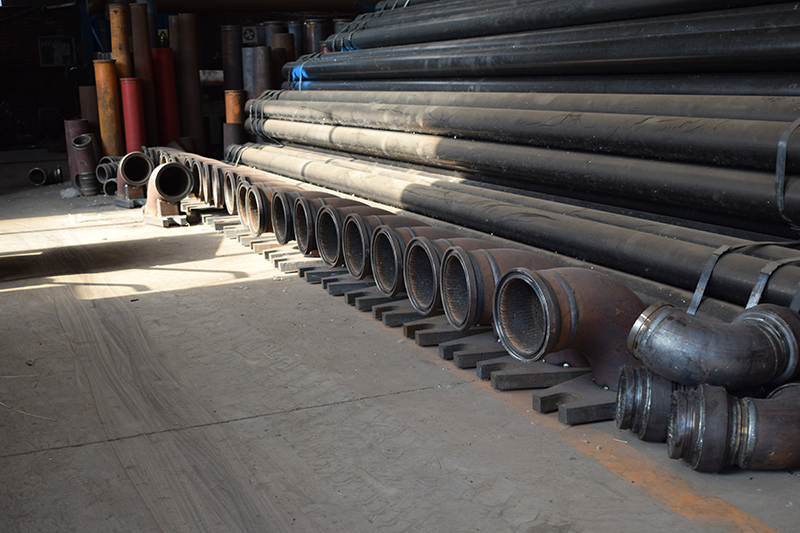
Elbows are necessary wherever the pipeline changes direction. At an elbow, the material flow turns, causing high localized wear. For this reason, elbows are often made with thicker walls or with wear-resistant materials. Common Qixiang products include DN125 10-degree double-wall concrete pump elbows and DN125 by R275 by 90-degree concrete pump elbows, where R275 refers to the bending radius. Double-wall elbows provide extra protection and can be rotated to extend service life. The company also supplies carbon steel elbows, high-wear-resistant elbows, single-wall elbows, double-wall elbows, and custom non-standard elbows for complex working conditions.
Concrete Pump Rubber Hoses
Rubber hoses are used at the end of the delivery line to provide flexibility for the operator. A concrete pump rubber hose must resist external wear and internal pressure while remaining flexible. Along with steel pipes and elbows, rubber hoses complete the run between the placing boom or outlet and the final placement point.
Concrete Pump Pipe Fittings and Spare Parts
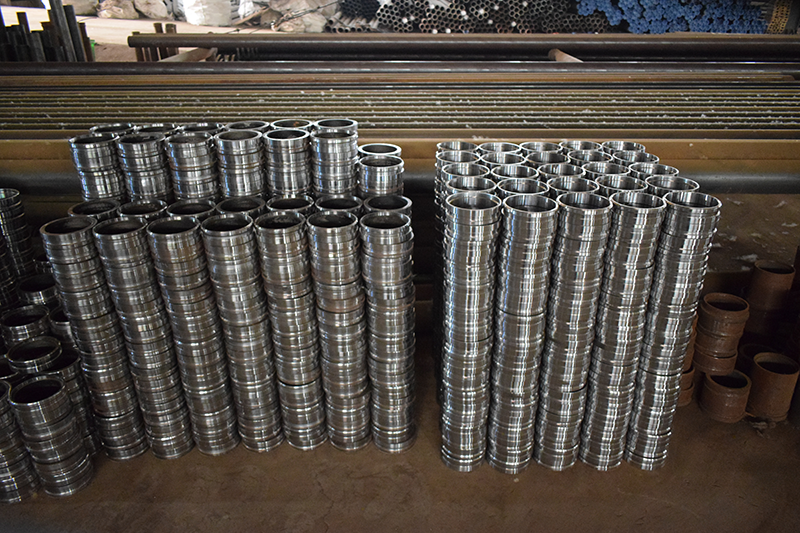
A full pipeline needs more than pipes and elbows. Couplings or clamps connect pipe sections, flanges provide secure attachment points, reducer pipes connect different diameters, sealing gaskets prevent leaks, and cleaning balls keep the line clean after pumping. Qixiang supplies a one-stop range of concrete pump spare parts including couplings or clamps, cleaning balls, pistons, flanges, and lubricants. Buying these components together with the pipes helps ensure dimensional compatibility and simplifies procurement.
Material Selection: What Affects Durability?
The material of a concrete pump pipe determines its pressure rating and wear behavior. In simple terms, carbon steel pipes are cost-effective for normal conditions; alloy steel pipes are selected when impact and abrasion are severe. Qixiang’s portfolio includes high-quality steel grades such as ST52, 45Mn2, Q235, No.20 steel, 37Mn5, and 55Mn alloy steel. For the most demanding work, 45Mn2 and 55Mn alloy steels are combined with quenching and inner-wall carburizing. This treatment creates a hard internal surface that slowly wears and protects the base pipe for longer.
It is also important to select the correct wall thickness and working pressure rating. A higher-strength material does not automatically mean the pipe is suitable for every system; the pipe must match the pump’s output pressure, line diameter, and the physical layout of the construction site. That is why suppliers with experience in multiple steel grades and custom specifications can add real value during the selection process.
How to Choose a Concrete Pump Pipe: Step-by-Step Breakdown
Step 1: Confirm the Pump System Standard
Check the pump model and the required delivery line diameter. Most concrete pumps and placing booms are designed around standard pipe diameters such as DN125, DN100, or DN80. Using the correct diameter is essential for flow rate and pump pressure. If in doubt, inspect the equipment manual or measure the existing inlet and outlet connections.
Step 2: Analyze the Working Pressure and Material Composition
High-pressure applications require pipes with stronger steel and adequate wall thickness. Continuous high-pressure operation can fatigue standard pipes over time, especially when pumping over long distances or to high floors. If the concrete mix contains large or sharp aggregates, the inner wall will wear faster. In such cases, a high-pressure and wear-resistant grade should be considered.
Step 3: Decide Between Standard and Wear-Resistant Pipe
Standard concrete pump pipe is an economical choice for routine projects where the abrasion level is moderate. Wear-resistant concrete pump pipe is better for high-volume pumping, high-rise construction, sand-heavy mixes, or projects that cannot afford frequent line changes. A wear-resistant line usually has a higher upfront cost but can lower the cost per cubic meter over the life of the project.
Step 4: Select Elbows and Bending Radius Carefully
Elbows should be selected according to the turning angle and the bend radius. For example, a DN125 by R275 by 90-degree elbow is a common component for 90-degree turns. Smaller angles such as 10-degree elbows are used to create gradual directional changes. Where wear is especially severe, a double-wall elbow can extend replacement cycles because the outer wall provides extra protection and the elbow can be rotated to spread wear.
Step 5: Plan for Hoses, Clamps, Gaskets, and Reducers
The complete delivery pipeline includes rubber hoses, clamps, flanges, reducer pipes, and sealing gaskets. These fittings must be rated for the same pressure as the pump pipes. It is also practical to stock cleaning balls, pistons, and lubricants for routine maintenance.
Step 6: Verify Supplier Capability and Request Technical Support
Before placing an order, ask the supplier about their manufacturing process, material sourcing, heat treatment capability, and testing procedures. A credible supplier should be able to explain how their pipes are made and which steel grade suits your application. For custom needs, confirm that the supplier offers OEM customization for specific lengths, diameters, elbows, and connection types.
Typical Applications for Concrete Pump Pipes
Concrete pump pipes are used in many types of projects where large volumes of concrete must be placed quickly and continuously. In China, for example, concrete pumping projects are common in high-rise building construction, infrastructure work, water conservancy projects, and mining engineering. These projects require continuous high-pressure operation, and the equipment supporting them includes concrete pumps, pump trucks, and placing booms.
In high-pressure, continuous operation, the role of the concrete pump pipe is to resist wear and extend service life. This is especially important in large-scale concrete pouring, where replacing a worn pipe in the middle of a pour can cause cold joints and costly delays. A properly selected pipe system also improves safety because it reduces the risk of pipe bursts and uncontrolled concrete leaks.
Standard vs. Wear-Resistant Concrete Pump Pipe: Quick Comparison
| Feature | Standard Concrete Pump Pipe | Wear-Resistant Concrete Pump Pipe |
|---|---|---|
| Typical materials | ST52 seamless structural steel, Q235 carbon structural steel, or Grade 20 (No.20) steel | 45Mn2 alloy steel or 55Mn alloy steel |
| Surface treatment | No additional inner-wall hardening | Quenching and inner-wall carburizing |
| Best suited for | Routine concrete placement, moderate wear, lower pressure conditions | High-pressure operation, abrasive mixes, continuous or large-volume pumping |
| Primary benefit | Economical solution for normal duty | Extended service life and reduced replacement frequency |
| Common accessories | Clamps, flanges, rubber hoses, reducers, gaskets | Double-wall elbows, wear-resistant elbows, flanges, clamps, hoses |
This comparison is not a fixed rule. Many contractors use standard pipes for low-wear sections of the line and switch to wear-resistant pipes only at high-wear points, such as elbows and the first few meters after the pump outlet. That approach balances performance and budget.
What to Look For When Selecting a Concrete Pump Pipe Supplier
Procurement teams who are new to concrete pump pipes should evaluate more than just the unit price. Here are practical criteria to consider when sourcing from a professional manufacturer like Hebei Qixiang Pipe Industry Co., Ltd.
- Specialization: a manufacturer that focuses on concrete pump pipes and related accessories is more likely to understand wear behavior, pressure requirements, and field failures.
- Production capability: in-house production lines, heat treatment ability, and testing equipment support consistent quality. Qixiang’s facility covers 30,000 square meters and includes precision testing systems such as delivery flow testing and hardness testing instruments.
- Product range: a broad catalog of pipes, elbows, hoses, clamps, and spare parts makes it easier to source a complete system from one partner.
- Custom ability: some projects require non-standard lengths, special diameters, or custom elbows. Check whether the supplier provides OEM customization.
- Export experience: suppliers with strong export records usually understand international packaging, documentation, and communication requirements. Qixiang serves customers in more than 40 countries, with around 80 percent of sales from export business.
- Quality control: ask how raw materials are sourced and how finished products are inspected. High-quality steel sourcing and final pressure, flow, and hardness checks reduce the risk of premature failure.
Frequently Asked Questions about Concrete Pump Pipes
What is a concrete pump pipe?
A concrete pump pipe is a steel delivery line used to transport concrete from a concrete pump, pump truck, or placing boom to the placement area. It is designed for the construction machinery industry and is intended to handle high-pressure, high-wear concrete conveying conditions.
What are the common sizes and materials of concrete pump pipes?
Common diameters include DN125, DN100, and DN80. Straight pipes are often produced in 3-meter lengths, with diameters ranging from 2 to 6 inches. Typical materials include ST52 seamless structural steel, 45Mn2 alloy steel, Grade 20 carbon steel, Q235 carbon structural steel, and 37Mn5 alloy steel.
When should I choose a wear-resistant concrete pump pipe?
Wear-resistant concrete pump pipes should be selected when the line is exposed to high pressure, continuous operation, or highly abrasive concrete. Qixiang makes these pipes from 45Mn2 or 55Mn alloy structural steel and applies quenching and inner-wall carburizing treatments to improve wear resistance and extend service life.
What is the difference between a concrete pump pipe and a mortar pump pipe?
Both are used in pumping systems, but concrete pump pipes are designed for concrete with coarse aggregates, while mortar pump pipes are used for mortar or fine-aggregate mixtures. The pipe diameter, material, and working pressure requirements may differ depending on the application.
How can I get specifications or request samples from Hebei Qixiang Pipe Industry?
You can contact Hebei Qixiang Pipe Industry Co., Ltd. directly for detailed specifications, customized solutions, or commercial inquiries. The sales team is available by email at sales@qixiangpipe.com or by phone at +86-15131761959.
Need a full product overview? Download the company brochure for more details on concrete pump pipes, elbows, and spare parts: Qixiang Concrete Pump Pipe Product Brochure (PDF).
For tailored assistance, email sales@qixiangpipe.com or call +86-15131761959.
Have Questions or Need More Details?
Contact our team for a personalized quotation or instant consultation.
Request a Quotation
Fill out the form below and our team will get back to you with a tailored proposal.
WhatsApp Direct Chat
Prefer to chat in real-time? Message us on WhatsApp for instant assistance & quick answers.
- Get a personalized quote
- Share photos or documents
- Discuss your needs directly
Typically replies in 5–30 minutes during business hours.