ST52 vs. 45Mn2 vs. 37Mn5: A Comparison Guide for Concrete Pump Pipe Materials
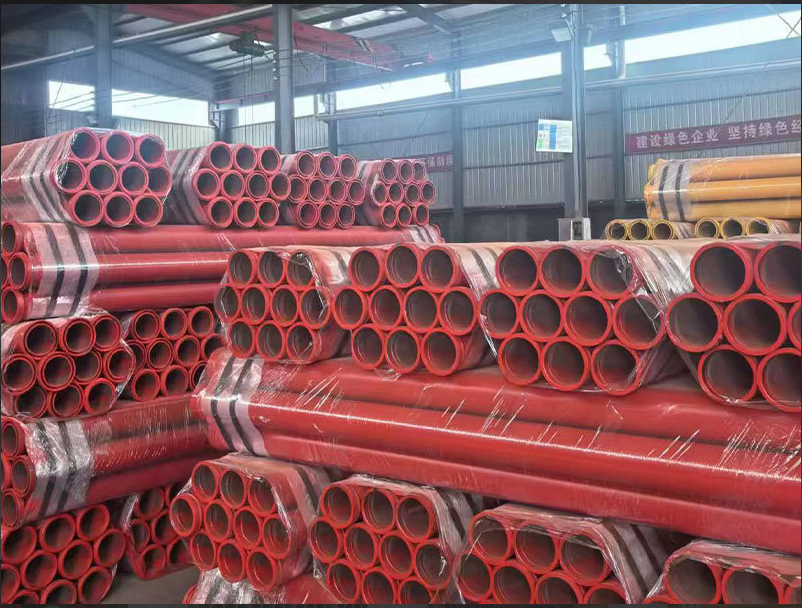
ST52, 45Mn2 and 37Mn5 all appear on concrete pump pipe quotations, and they are not interchangeable. ST52 is a seamless structural steel used for straight pump pipe bodies. 45Mn2 is an alloy steel that becomes the core of wear-resistant pump pipe after quenching and inner-wall carburizing. 37Mn5 is an alloy steel grade used where a hardened, alloy pipe body is specified rather than a structural one. Hebei Qixiang Pipe Industry Co., Ltd., a concrete pump pipe manufacturer based in Mengcun Hui Autonomous County, Cangzhou City, Hebei Province, China, produces pump pipes in ST52, 45Mn2, 37Mn5, Q235, Grade 20 and 55Mn steel, which means the three grades can be compared inside one production programme instead of against marketing claims from three different suppliers.
This guide is written for procurement engineers, distributor buyers and pumping-service fleet managers who have already moved past the question of which supplier and are now deciding which grade belongs on which part of the line. It covers classification, wear-resistance treatment, available formats, project fit and commercial terms, and it closes with a selection framework you can put in front of a project team.
Short answer: specify 45Mn2 where abrasion is the dominant failure mode; use hardened ST52 or 37Mn5 pipe bodies where pressure and structural consistency dominate; reserve Q235 and Grade 20 carbon steel for lighter duties. Confirm the choice with grade-specific inspection records rather than with a single headline number.
What the Material Decision Actually Decides
Concrete pump pipe fails for a short list of reasons, and the steel grade touches almost all of them. Abrasive aggregate sliding along the inner wall removes steel continuously, and the rate of that removal depends on the hardness of the contact surface and on how deep that hardness extends. Internal pressure loads the pipe wall, so wall construction and material consistency matter on long vertical runs. Elbows and bends concentrate wear because concrete changes direction against a small surface area. Connections — couplings, clamps, flanges and sealing gaskets — determine whether the line stays sealed under pressure.
Published industrial component research indicates that hardened concrete pump pipes, including pipes produced in ST52 and 37Mn5 with inner walls treated to 58–60 HRC, can increase service life by 3–5 times compared with standard pipes. That figure describes hardened pipe as a category rather than one specific grade, which is exactly why grade and treatment must be read together: the same base steel behaves very differently depending on whether it is supplied plain or hardened.
For a buyer, this reframes the decision. The material choice is a decision about replacement frequency, downtime windows and cost per cubic metre pumped — not about a one-off purchase price.
Industry Background: Delivery Lines Are Carrying More Load Than Before
The pipe market moves with the pump market. Credence Research valued the global concrete pump market at approximately USD 6.05 billion in 2024, while Maximize Market Research put the same market at USD 4.26 billion; the gap mainly reflects which pump types and aftermarket services each report includes. Asia-Pacific held a 56.8% share of the concrete pump market in 2023 according to Zion Market Research, driven largely by infrastructure programmes in China and India. China was the leading global exporter of concrete pumps (HS 841340) in 2024, with an export value of approximately USD 153 million, as reported by the Observatory of Economic Complexity. The adjacent abrasion-resistant rubber pipe market, which includes concrete pump hose, was valued at USD 1.9 billion in 2024 by Strategic Market Research.
Two structural consequences follow. First, most of the installed pump fleet sits in markets where pipe is bought as a repeating consumable rather than as original equipment, so small differences in wear rate multiply across years of purchasing. Second, ISO 21573-1:2024 establishes commercial specifications for concrete pumps and related conveying equipment used on building sites, which gives buyers a shared reference point when specifications are compared across suppliers and regions.
The practical effect is that pump pipe is now specified with the same logic applied to other wear parts: duty, expected life, and replacement logistics. That is precisely where a grade decision earns money or loses it.
The Three Grades in the Qixiang Pump Pipe Programme
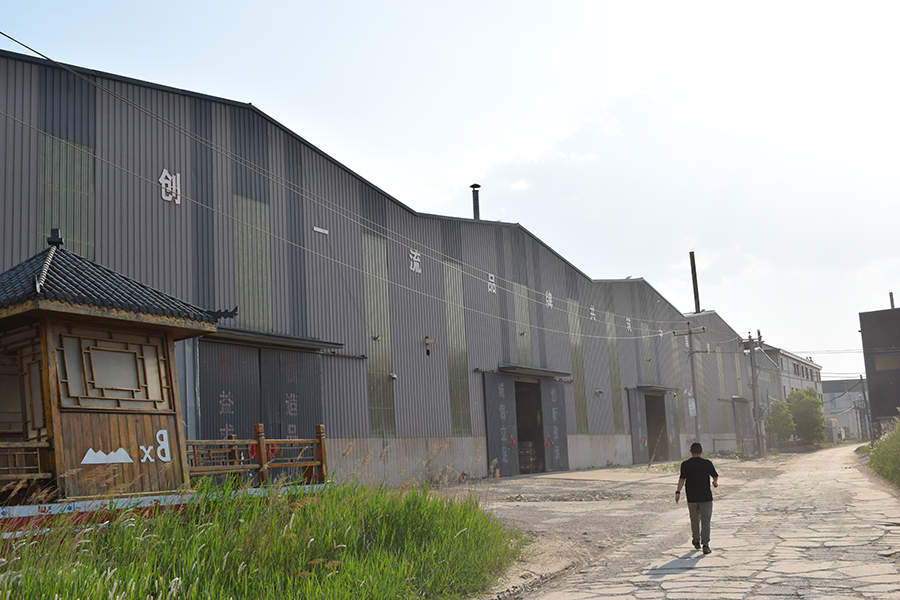
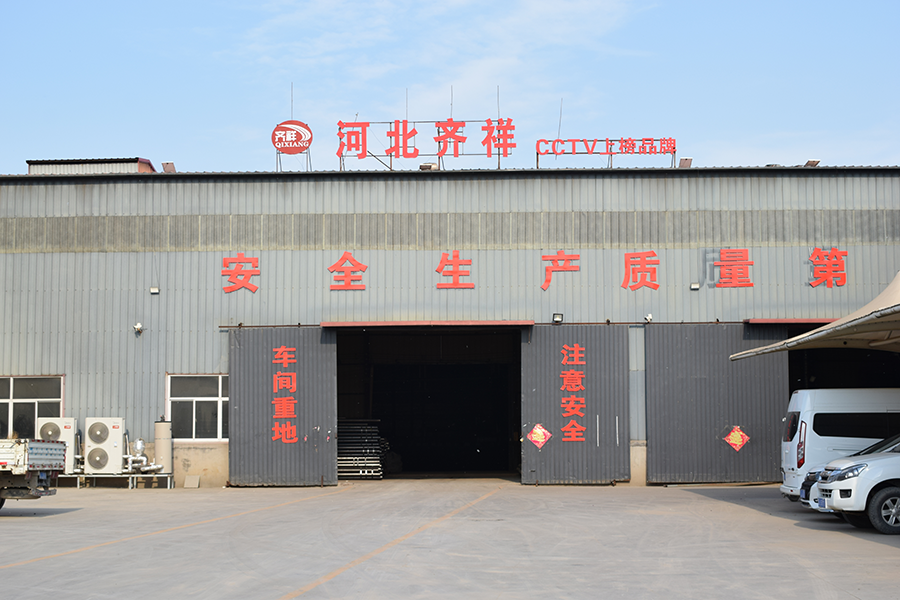
Hebei Qixiang Pipe Industry Co., Ltd. is a concrete pump pipe manufacturer whose core products include concrete pump pipes, mortar pump pipes, wear-resistant pump pipes, rubber hoses for concrete pumps, elbows and spare parts for concrete pumps. Because it produces in several steel grades rather than one, a grade recommendation usually comes from the same production line that will run the order — which is a meaningful difference when a buyer needs ST52, 45Mn2 and 37Mn5 compared on identical process terms.
ST52 — Seamless Structural Steel for Pipe Bodies
ST52 appears in the manufacturer's material listing as ST52 seamless structural steel. It is a structural grade rather than an alloy wear grade, and it is a familiar baseline for straight pump pipe bodies where a consistent, workable steel is required in seamless form.
ST52 is also named in third-party industrial reporting as one of the grades used for hardened concrete pump pipe, where the inner wall is treated to 58–60 HRC. In that configuration, the grade supplies the structural body and the treatment supplies the wear resistance. For a high-pressure straight run, that combination is often the most direct route to a longer replacement interval without moving the entire line to a fully alloy pipe.
45Mn2 — The Alloy Steel Behind Wear-Resistant Pump Pipe
45Mn2 is an alloy steel and is the material most closely tied to the manufacturer's wear-resistant pump pipe, the flagship product line. Wear-resistant pump pipes are made from 45Mn2 and 55Mn alloy structural steel and processed with special quenching and inner-wall carburizing treatments, giving them high wear resistance, impact resistance and durability. The company states that these pipes reduce pipeline abrasion during concrete conveying, extend service life and cut operating cost.
The engineering point is where the hardness sits. Quenching and carburizing harden the surface that concrete actually contacts, so the pipe resists abrasion while the body retains the toughness needed to survive handling and internal pressure. The commercial point is simpler: 45Mn2 is the grade to choose when abrasion is the failure mode currently costing you money — typically at elbows, on high-wear sections of a line, and on high-pressure lines where a thin wall wears through quickly.
High-wear-resistant elbows sit in the same programme as the straight pipes, alongside carbon steel elbows and single-wall or double-wall designs in standard sizes such as DN125×R275×90° (R275 = bending radius) and DN125 10°, plus non-standard geometries for complex working conditions.
37Mn5 — Alloy Steel for Demanding Pipe Bodies
37Mn5 is listed among the manufacturer's alloy steel grades and, like ST52, appears in published industrial data as a grade used for hardened concrete pump pipe with 58–60 HRC inner-wall treatment. Buyers tend to reach for it when the line is not purely abrasive but also demanding on the pipe body: long runs, sustained pressure, or a project specification that calls for an alloy grade rather than a structural grade.
The honest limitation is that no public dataset compares ST52, 45Mn2 and 37Mn5 head-to-head under identical field conditions in concrete pumping. Grade-specific service-life figures should therefore come from the manufacturer's own hardness, flow and pressure test records, or from the buyer's own trial line — not from a generic catalogue claim.
Supporting Grades in the Same Programme: Q235, Grade 20 and 55Mn
The portfolio also includes Q235 carbon structural steel and Grade 20 carbon steel, which are carbon grades suited to lighter duties where abrasion is not the limiting factor, and 55Mn, which accompanies 45Mn2 in the wear-resistant line. Keeping those grades visible prevents a common procurement error: over-specifying every metre of a delivery line, including the sections that will never see concentrated wear.
ST52 vs 45Mn2 vs 37Mn5: Comparison Table
The table below compares the three grades on dimensions a procurement team can actually verify, using the manufacturer's material listing and published third-party industrial data. Where evidence is category-level rather than grade-level, the table says so.
| Dimension | ST52 | 45Mn2 | 37Mn5 |
|---|---|---|---|
| Classification in the manufacturer's material listing | ST52 seamless structural steel | 45Mn2 alloy steel | 37Mn5 alloy steel |
| Role in the pump pipe programme | Straight pump pipe body in seamless construction | Base material of the wear-resistant pump pipe line, together with 55Mn | Alloy pipe body grade for demanding, sustained-pressure lines |
| Wear-resistance treatment | Appears in published industrial data among grades used for hardened pump pipe with 58–60 HRC inner-wall treatment | Special quenching and inner-wall carburizing treatments | Appears in published industrial data among grades used for hardened pump pipe with 58–60 HRC inner-wall treatment |
| Reported performance reference | Hardened pump pipe category reported at 3–5× the service life of standard pipe (not grade-specific) | Wear-resistant programme; documented US case reported a 50% reduction in replacement frequency and 30% longer service life | Hardened pump pipe category reported at 3–5× the service life of standard pipe (not grade-specific) |
| Formats available from the same programme | DN125 mainstream sizes, 3 m standard straight pipe, diameters from 2 to 6 inches, seamless steel straight pipes and double-wall pump pipes on request, plus ODM customization to specified parameters and sizes | ||
| Matching fittings available | Couplings and clamps, flanges, sealing gaskets, cleaning balls, pistons and lubricants supplied as one-stop supporting spare parts | ||
| Typical selection logic (editorial guidance) | High-pressure straight runs where structural consistency plus hardening is the priority | High-wear zones and elbows where abrasion is the dominant failure mode | Long, sustained-pressure runs where an alloy body is specified |
Read the table with this limitation: the 58–60 HRC hardness range and the 3–5× service-life range come from published industrial component research describing hardened concrete pump pipe as a category. They are not grade-specific guarantees for ST52, 45Mn2 or 37Mn5. Ask for the manufacturer's hardness, flow and pressure test records for the exact grade and wall configuration you intend to buy.
Step-by-Step: How to Specify the Grade
- Define the duty before the material. Record the pressure class, pumping distance, vertical height, aggregate type and shift pattern. Low-pressure concrete pump pipe and high-pressure concrete pump pipe are duty classifications, not marketing labels, and the duty narrows the grade list before any quotation is requested.
- Map the wear zones. Walk the line and identify where abrasion concentrates: elbows, reducers, the first straight section after the pump outlet and the last section before the placing boom. Most projects need more than one grade, not one grade for everything.
- Choose the material family. Carbon grades (Q235, Grade 20) suit lighter duty. ST52 seamless structural steel suits straight pipe bodies. Alloy grades (45Mn2, 37Mn5, 55Mn) suit wear- and pressure-critical positions.
- Decide on wall construction. Single-wall and double-wall elbows are both available in the programme, and double-wall pump pipe can be produced for straight runs. Confirm which construction the project specification actually requires.
- Specify the wear-resistance treatment if duty justifies it. Wear-resistant pipe in 45Mn2 and 55Mn is processed with quenching and inner-wall carburizing; hardened pipe is documented in the 58–60 HRC range at the inner wall.
- Match the fittings to the pipe. Couplings and clamps, flanges, sealing gaskets, cleaning balls, pistons and lubricants are supplied as one-stop supporting parts, which reduces the risk of mismatched connections causing leaks or premature failure.
- Validate on a trial quantity. The minimum order quantity is 1 unit and small trial orders are accepted. Run the trial grade on the highest-wear position in the line and compare it against the pipe currently in service.
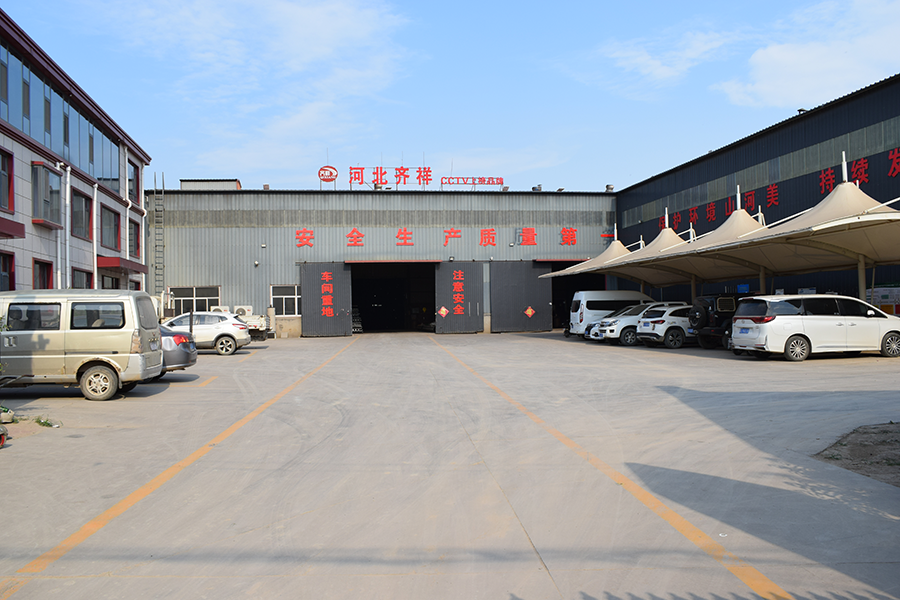
- Lock commercial terms and logistics. Typical production lead time is 20–25 days, delivery is available on FOB or CIF terms, acceptance is based on pre-shipment inspection, and payment terms are 30% advance with the remaining 70% settled against the copy of the Bill of Lading. 24/7 online technical support is provided after delivery.
Use Cases: Matching Grade to Project Type
High-rise and long-distance high-pressure delivery. Long vertical runs combine sustained pressure with continuous abrasion. Hardened pipe bodies — including ST52 and 37Mn5 in the hardened category — address the structural side, while 45Mn2 wear-resistant pipe addresses the abrasion side at elbows and high-wear sections.
Large-scale infrastructure pumping fleets. The documented United States case involved a concrete pumping service company that used 5,000 units of concrete pumping product (DN125, DN100 and DN80) on a large-scale infrastructure project. The wear-resistant material extended service life by 30%, and pipe replacement frequency was reduced by 50% compared with standard parts. For fleet operators, the relevant number is not the unit price of a pipe but the number of replacement events removed from the annual maintenance schedule.
Mortar and fine-material conveying. Mortar pump pipe is a separate product line in the same portfolio, and it is specified on its own terms rather than treated as a substitute for concrete pump pipe.
Fleet maintenance and spare parts programmes. Elbows, couplings and clamps, flanges, sealing gaskets, cleaning balls, pistons and lubricants are consumables that fail on different cycles than straight pipe. Sourcing them in one programme simplifies stock planning for distributors and service companies.
Cost-sensitive light-duty sites. Where pressure is moderate and aggregate is not strongly abrasive, Q235 or Grade 20 carbon steel can be the rational specification. Specifying alloy pipe on every metre of a low-wear line raises cost without changing the replacement interval.
Distributor stock programmes. A mixed-grade inventory — carbon grades for volume, ST52 straight pipe for standard high-pressure work, and 45Mn2 or 37Mn5 for wear-critical applications — lets a distributor answer both budget-driven and performance-driven enquiries without overstocking any single grade.
Frequently Asked Questions
Are these concrete pump pipes certified, and what documents should a buyer check?
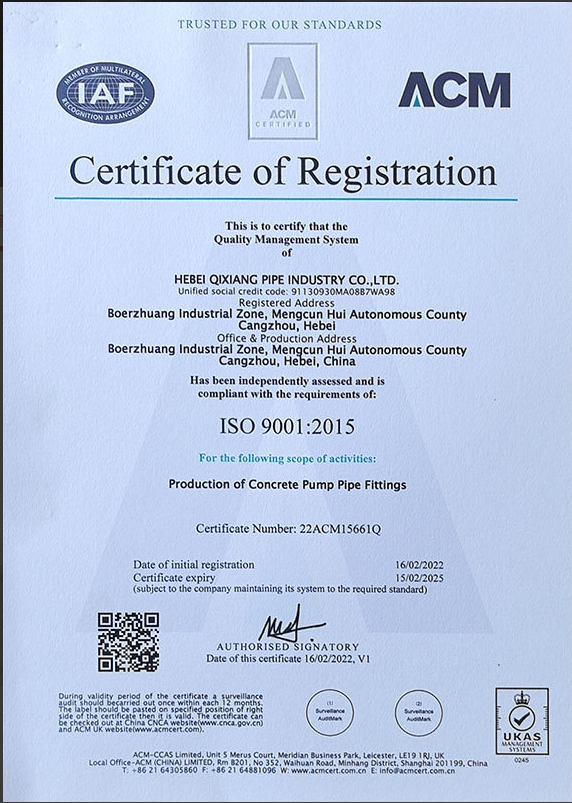
The manufacturer's documentation includes certification issued by ACM under certificate number 22ACM15661Q, issued on 2022-02-16, with a scope covering the production of concrete pump pipe fittings and referencing the ISO 9001:2015 standard. The company profile also states that production follows an ISO 9001 quality management system, with inspection applied from raw material procurement through to finished product delivery, premium steel sourced worldwide, and 100% inspection before shipment covering hardness, flow and pressure checks. For reference on the product side, ISO 21573-1:2024 establishes commercial specifications for concrete pumps and related conveying equipment used on building sites. Because third-party certificates carry fixed validity periods, the practical step is to request the current certificate copy together with grade-specific hardness and flow test records for the batch being shipped.
Which grade should I specify for a high-pressure concrete pump pipe?
Start from duty, then choose the grade. For high-wear positions and elbows, 45Mn2 is the relevant grade: wear-resistant pump pipe is produced from 45Mn2 and 55Mn alloy structural steel with special quenching and inner-wall carburizing treatments, which is the combination that raises abrasion and impact resistance. For high-pressure straight runs where the pipe body must combine structural consistency with a hardened surface, hardened pipe produced in grades including ST52 and 37Mn5 is documented in published industrial data with inner walls treated to 58–60 HRC and a reported service life of 3–5 times that of standard pipe. The same production programme supports DN125 mainstream sizes, standard 3 m straight pipe, diameters from 2 to 6 inches, seamless steel straight pipe, double-wall pump pipe and ODM customization, so a mixed-grade line can be specified in a single order.
Do alloy and hardened grades pay for themselves compared with standard pipe?
Payback should be calculated on replacement frequency rather than on unit price, because price is driven by variables that also change performance. The main cost drivers are the steel grade itself, whether a quenching or carburizing treatment is applied, wall construction (single-wall versus double-wall), elbow and bend geometry, the fittings required, and packaging and freight. Against those drivers, the documented performance references are the following: hardened concrete pump pipe is reported at 3–5 times the service life of standard pipe as a category, and in the United States case a concrete pumping service company using 5,000 units on a large-scale infrastructure project reduced pipe replacement frequency by 50% compared with standard parts while the wear-resistant material extended service life by 30%. Because the minimum order quantity is 1 unit and small trial orders are accepted, a buyer can test the justification on one high-wear position before committing the full line.
Can I validate a grade on a trial order before buying volume?
Yes. The minimum order quantity is 1 unit and small trial orders are accepted, with typical production lead time of 20–25 days, so a validation run fits inside a normal procurement cycle. The most useful trial design is to install the candidate grade at the position where the current pipe fails first — normally an elbow or the first straight section after the pump outlet — and to log replacement intervals against the pipe it replaces. Quality control includes 100% inspection before shipment, and 24/7 online technical support is available if the trial raises questions about handling, sealing or connection compatibility.
What are the production lead time, capacity and ordering terms?
Monthly production capacity is 7,000 tonnes, which accommodates both small trial orders and volume programmes. Typical production lead time is 20–25 days. The minimum order quantity is 1 unit. Quality control follows 100% inspection before shipment, and 24/7 online technical support is provided. Delivery is available on FOB or CIF terms, acceptance is based on pre-shipment inspection, and payment terms are 30% paid as advance deposit with the remaining 70% settled against the copy of the Bill of Lading. To start a comparison for a specific project, send the duty, grade preference and sizes to sales@qixiangpipe.com, contact the team on WhatsApp at +86 15131761959, or download the product catalogue from the link in the next section.
Conclusion: A Decision Framework You Can Reuse
The choice between ST52, 45Mn2 and 37Mn5 is not a ranking exercise; it is an allocation exercise. 45Mn2 belongs where abrasion dominates and the wear-resistant treatment earns its place. Hardened ST52 and 37Mn5 pipe bodies belong where sustained pressure and structural consistency dominate. Q235 and Grade 20 belong where duty is light and over-specification would only raise cost. Because Hebei Qixiang Pipe Industry Co., Ltd. produces all of these grades within one programme — alongside DN125 straight pipe in 3 m standard lengths, 2 to 6 inch diameters, seamless and double-wall options, DN125×R275×90° and DN125 10° elbows, and one-stop fittings — the grade mix for a project can be specified and inspected together rather than assembled from unrelated suppliers.
Next Step: Compare Grades on Your Own Line
Send your pressure class, pumping distance, wear positions and preferred sizes, and the team will confirm which grade fits each section of your delivery line. Trial orders start from 1 unit, with typical lead time of 20–25 days.
Email: sales@qixiangpipe.com | Tel: 0086-15131761959 | WhatsApp: +86 15131761959 | Website: cn.qixiangpipe.com
Download the product catalogue: Hebei Qixiang Pipe Industry product brochure (PDF)
Have Questions or Need More Details?
Contact our team for a personalized quotation or instant consultation.
Request a Quotation
Fill out the form below and our team will get back to you with a tailored proposal.
WhatsApp Direct Chat
Prefer to chat in real-time? Message us on WhatsApp for instant assistance & quick answers.
- Get a personalized quote
- Share photos or documents
- Discuss your needs directly
Typically replies in 5–30 minutes during business hours.