Concrete Pump Pipe Application Guide: Selecting the Right Pipe for Large-Scale Infrastructure
Wear-resistant concrete pump pipe and supporting fittings for large-scale infrastructure conveying lines. Image: Hebei Qixiang Pipe Industry Co., Ltd.
Selecting the right concrete pump pipe for a large-scale infrastructure project is a decision about matching steel grade and diameter to the pressure and abrasion profile of a specific pouring line. It is not a decision about the lowest price per metre.
On a project where a single placing sequence can run for hours, a worn-through pipe or a failed clamp does not simply cost one replacement component. It stops the line, idles the pump truck and delays the pour. This application guide explains how contractors, project managers and procurement teams select concrete pump pipe for large-scale infrastructure: which material grades (37Mn5, 45Mn2, ST52) suit which duty, how diameters (DN125, DN100, DN80) map to line layout and equipment, and how wear-resistant pipe compares with ordinary carbon steel on service life, replacement frequency and total cost.
Problem Definition: Why Pump Pipe Choices Fail on Large Infrastructure Projects
Most pump pipe failures on infrastructure sites are not manufacturing defects. They are selection errors that only become visible once the line is under continuous load.
- Pressure and abrasion are treated as one requirement. A line can be within its pressure limit and still wear out quickly, because abrasion is driven by mix design, pumping distance and continuous runtime rather than by discharge pressure alone.
- Diameter is chosen for convenience, not for the line. A DN80 section inserted into a high-volume main line creates a restriction that the rest of the system has to work around.
- Fittings are treated as an afterthought. Elbows, clamps, reducers and sealing gaskets sit at the points of highest turbulence, so component quality matters as much as pipe quality.
- Replacement frequency is not planned. When spares are ordered reactively, every worn pipe becomes unplanned downtime instead of scheduled maintenance.
- Compatibility is assumed rather than checked. Pipe, elbow, clamp and hose must be dimensionally matched across the whole conveying system, including the pump truck, placing boom and pouring machine interfaces.
The purpose of this framework is to convert those five risks into specification decisions that can be written into a purchase order before the first pour.
Industry Background: The Demand Context Behind Pipe Selection
Concrete pump pipe is a consumable inside a market that continues to expand, which means the availability of certified, wear-resistant pipe has become a supply-chain question rather than a purely technical one.
According to Credence Research, the global concrete pump market — the primary demand driver for pump pipes and spare parts — was valued at approximately USD 6.05 billion in 2024. Zion Market Research reported that Asia-Pacific accounted for 56.8% of that market in 2023, driven mainly by infrastructure programmes in China and India. On the export side, the Observatory of Economic Complexity (OEC) recorded China as the leading global exporter of concrete pumps (HS 841340) in 2024, with an export value of approximately USD 153 million.
The adjacent consumable category is also substantial: Strategic Market Research values the global abrasion-resistant rubber pipe market, which includes concrete pump hoses, at USD 1.9 billion in 2024. Published market-size estimates for concrete pumps do vary between research houses depending on whether boom pumps, stationary pumps and aftermarket services are included — for example, Maximize Market Research reports a lower figure of USD 4.26 billion for the same period — so market data is best used as a demand indicator rather than as a procurement input.
What does translate directly into procurement is standardisation. ISO 21573-1:2024 establishes commercial specifications for concrete pumps and related conveying equipment used on building sites, giving project teams a common reference when a specification calls for conformity. For hardened pipe, published industry research indicates that concrete pump pipes with inner walls treated to 58–60 HRC can increase service life by 3–5 times compared with standard pipes.
Detailed Solution: A Material, Diameter and Fitting Framework
Hebei Qixiang Pipe Industry Co., Ltd. is a manufacturer of concrete pump pipes and conveying accessories located in the Boerzhuang Industrial Zone, Mengcun Hui Autonomous County, Cangzhou City, Hebei Province, China. Founded in 2015, the company operates a 30,000 m² facility with more than 10 professional production lines for pump truck pipelines, an annual production capacity of up to 7,000 tons, and a global customer base of more than 300 customers across over 40 countries and regions. Its website is cn.qixiangpipe.com.
The selection framework below follows the order in which a large-scale infrastructure specification is normally written: material first, then diameter, then fittings, then verification.
Step 1 — Match the steel grade to the wear regime
The available grades are not interchangeable. Qixiang supplies concrete pump pipes in ST52, 45Mn2, Q235, No.20 steel, 37Mn5 and 55Mn alloy. Wear-resistant pump pipes — the company's flagship product line — are produced from 45Mn2 and 55Mn alloy structural steel and processed with special quenching and inner-wall carburizing treatments, which raise wear resistance, impact resistance and durability.
For high-wear, high-load infrastructure lines, the decision rule is straightforward: specify a hardened, wear-resistant grade where the pipe will run continuously against abrasive mix, and reserve general-purpose grades such as Q235 or No.20 steel for lower-duty sections where abrasion is not the dominant failure mode. The trade-off is real — a hardened, carburized pipe carries a higher cost per metre than ordinary carbon steel, and it only pays back when the duty cycle is genuinely abrasive.
Step 2 — Size the line: DN125, DN100 and DN80
DN125 is the mainstream specification for concrete pump pipe, and Qixiang supplies it with standard straight pipes of 3 metres in length. The wider range covers diameters from 2 to 6 inches, including DN100 and DN80, and the completed line is designed to be compatible with concrete pump trucks, placing booms and concrete pouring machines.
Sizing should follow the limitation in the system, not the preference of the person ordering. Where flow restriction is the binding constraint, the larger bore is the correct choice. Where physical space, boom geometry or equipment interface imposes a smaller bore, DN100 and DN80 sections are used for those legs of the line — accepting that smaller bores generally see higher local velocity and therefore faster wear.
Step 3 — Specify elbows, clamps, gaskets and hoses together
Elbows are the highest-wear components in any conveying line because they absorb the directional impact of the mix. Qixiang produces carbon steel elbows, high-wear-resistant elbows, single-wall elbows and double-wall elbows in standard sizes such as DN125R27590° and DN125 10°, along with non-standard customised elbows for complex working conditions.
The supporting scope matters just as much. A complete order typically includes couplings and clamps, cleaning balls, pistons, flanges and lubricants, plus rubber hoses for concrete pumps. Buying pipe from one source and fittings from another is a common cause of sealing problems, because clamp geometry, gasket dimensions and pipe wall thickness are designed as a set.
Step 4 — Verify before the pipe reaches the site
Wear and tear is the dominant risk in pump pipe procurement, and it is controlled in two places: by specifying a wear-resistant alloy in the first instance, and by strict incoming material inspection so that the alloy actually delivered matches the alloy specified. Qixiang sources premium steel materials globally and operates under an ISO 9001:2008 quality management system, with inspection and control applied from raw material procurement through to finished product delivery. Before dispatch, finished products pass multiple precision tests including hardness, flow and pressure inspections.
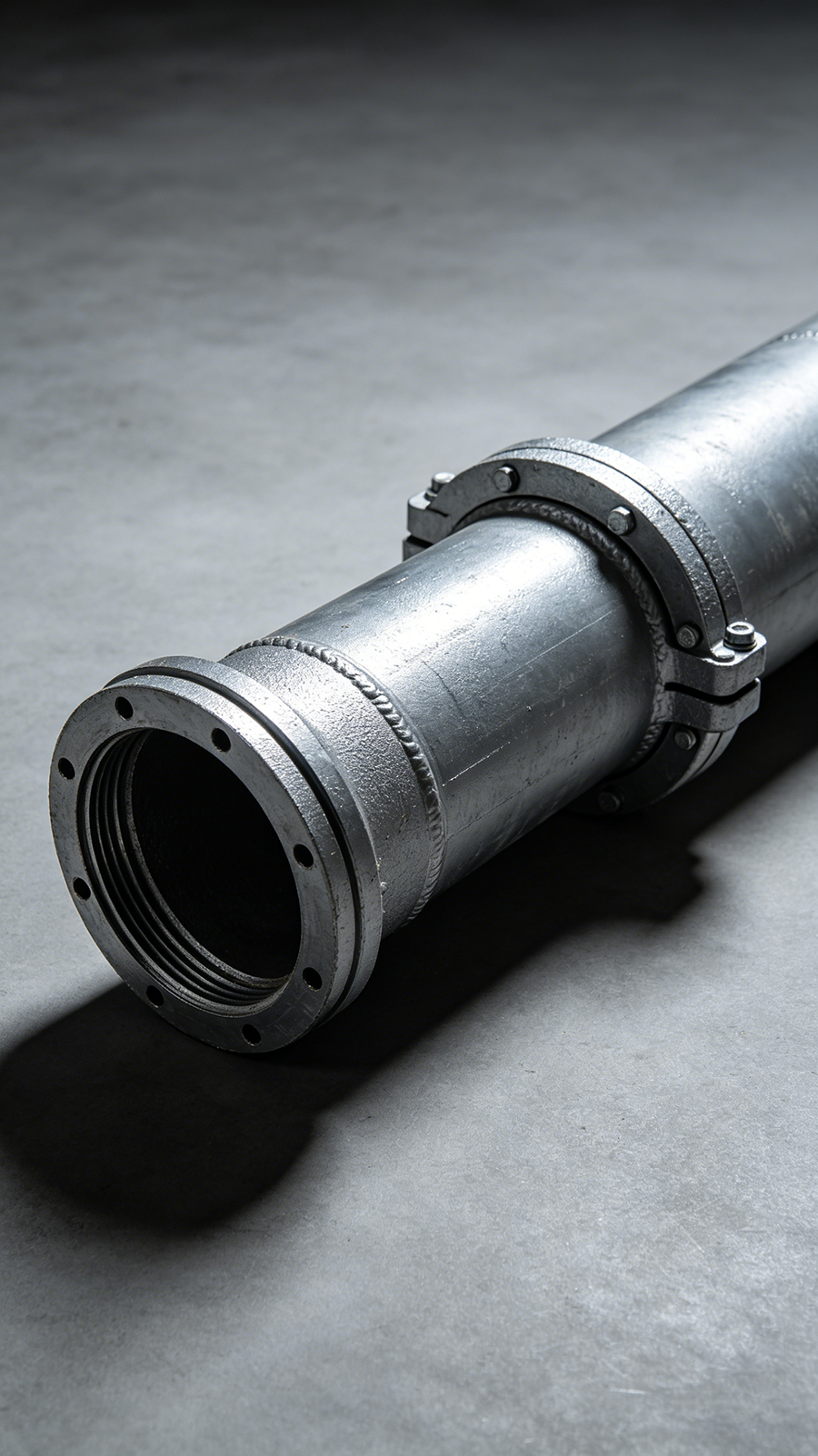
Straight pipe and elbow combinations are specified as a set so that wall thickness, clamp geometry and gasket dimensions remain matched.
Manufacturing capacity behind the specification
Specification is only useful if it can be delivered at scale. Hebei Qixiang Pipe Industry Co., Ltd. runs more than 10 advanced professional production lines for pump truck pipelines, staffed by over 50 skilled production workers, with precision testing equipment that includes delivery flow testing systems and hardness testing instruments. The company also offers OEM customisation services to meet specific technical parameters and size requirements, including customised products such as seamless steel straight pipes and double-wall pump pipes.
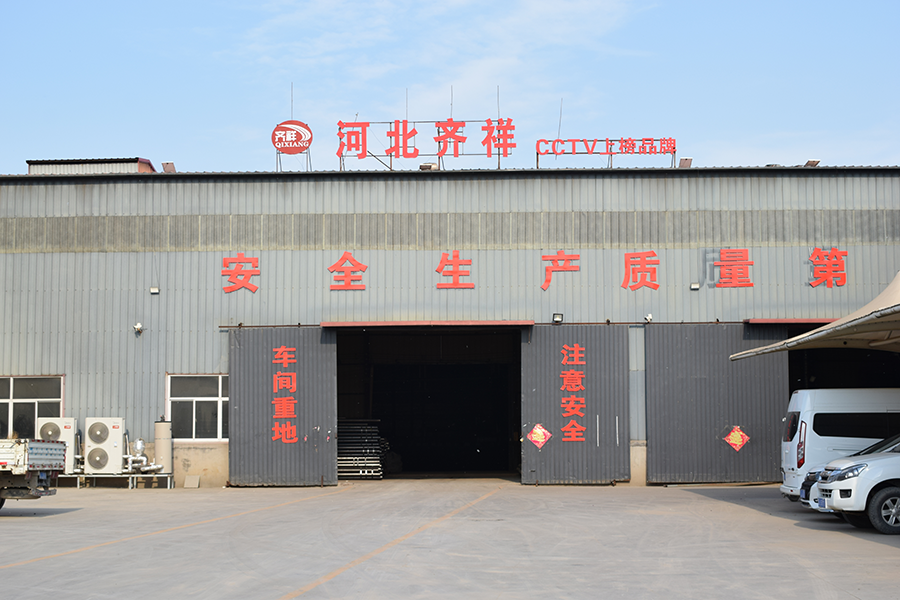
Production and quality-inspection operations at the Hebei Qixiang facility, where wear-resistant pipe is processed and tested before dispatch.
Step-by-Step Breakdown: Specifying Pipe for a Large Infrastructure Project
The following sequence is written for project engineers and procurement managers who need a defensible specification before the purchase order is issued.
- Map the pumping profile. Record the mix design, the total horizontal and vertical conveying distance, the discharge pressure range and the expected continuous runtime per pour. These four inputs determine whether the line is pressure-limited or abrasion-limited.
- Select the material grade. Specify 45Mn2 or 55Mn alloy for the wear-resistant, carburized pipe where abrasion dominates. Use general grades such as ST52, Q235 or No.20 steel for lower-duty sections, and reserve 37Mn5 for hardened pipe applications where an inner-wall hardness in the 58–60 HRC band is required.
- Fix the diameter for each leg of the line. Confirm DN125 as the main conveying specification, then define exactly where DN100 and DN80 sections are needed and why. Document the transition points so that reducers are ordered with the pipe.
- Count the elbows before counting the pipe. Identify every change of direction and specify the elbow type accordingly — high-wear-resistant, double-wall or single-wall — with standard sizes such as DN125R27590° where geometry permits, and non-standard customised elbows where it does not.
- Bundle the consumables. Add clamps and couplings, sealing gaskets, reducers, flanges, cleaning balls, pistons, lubricants and concrete pump rubber hose to the same order so the sealing system is dimensionally consistent.
- Require evidence before dispatch. Ask for incoming material verification and finished-product test records covering hardness, flow and pressure inspection. Where the project specification cites a standard, reference ISO 21573-1:2024 as the commercial specification baseline for concrete pumps and conveying equipment.
- Plan the replacement schedule. Convert the expected service life into a scheduled consumable replacement calendar. Because wear-resistant pipe lasts longer and is replaced less frequently, the maintenance window can be planned around pour cycles instead of reacting to failures.
Comparison Table: Wear-Resistant vs Ordinary Carbon Steel Concrete Pump Pipe
The single most consequential comparison in infrastructure pipe selection is between wear-resistant pipe and ordinary carbon steel pipe. The table below compares them on the criteria that drive maintenance cost and downtime.
| Comparison criterion | Wear-resistant concrete pump pipe | Ordinary carbon steel concrete pump pipe |
|---|---|---|
| Wear resistance | Higher wear resistance | Baseline reference |
| Service life | 50% longer service life | Shorter service life |
| Replacement frequency | Less frequent replacement | Replaced more often |
| Cost effect | Lower replacement frequency reduces cost | Higher lifetime replacement burden |
| Performance under load | Stable performance under high load | Not intended for the same duty |
| Best-fit scenario | High-rise buildings and high-wear duties | Lower-wear, lower-duty lines |
The second decision layer is grade and diameter selection. The table below maps the specifications available from Hebei Qixiang Pipe Industry Co., Ltd. to their typical duty.
| Specification | Supplier status | Typical role in an infrastructure line |
|---|---|---|
| 45Mn2 / 55Mn alloy | Flagship wear-resistant pipes, quenched with carburized inner wall | Continuous, abrasive duty on long pours |
| 37Mn5 / ST52 | Hardened pipe grades available in the range | High-wear sections where hardened inner-wall performance is specified |
| Q235 / No.20 steel | General-purpose grades in the range | Lower-duty sections and non-critical runs |
| DN125 | Mainstream; standard straight pipe 3 m | Main conveying line on pump trucks and placing booms |
| DN100 / DN80 | Available within the 2–6 inch range | Legs of the line where geometry or equipment interface sets the bore |
| Seamless / double-wall pipe | Customised options | Long-distance, high-load conveying |
Use Cases: Where Each Pipe Specification Fits
High-rise and vertical placing. Vertical lines combine sustained pressure with heavy abrasion at every elbow. This is the scenario wear-resistant pipe is designed around: higher wear resistance, a 50% longer service life than ordinary carbon steel pipe, less frequent replacement, and stable performance under high load.
Long-distance and high-load conveying. Qixiang products are widely applied in construction projects, infrastructure development, water conservancy projects and mining engineering, where they deliver stable performance in large-scale concrete pouring and long-distance, high-load mortar conveying. For these duties, seamless steel straight pipes and double-wall pump pipes are available as customised options.
Field evidence — a U.S. infrastructure project. In a large-scale infrastructure project in the United States, a deployment of 5,000 units of wear-resistant pipes extended service life by 30% and reduced replacement frequency by 50% at project level. For the contractor, the practical outcome was fewer unplanned line stoppages and a more predictable consumable schedule across the pouring programme.
Mortar and specialty conveying. Mortar pump pipes and concrete pump rubber hoses extend the same system to applications where the mix or the line geometry differs from standard concrete pumping. Specifying these components within the same order keeps clamp, flange and gasket interfaces consistent across the whole system.
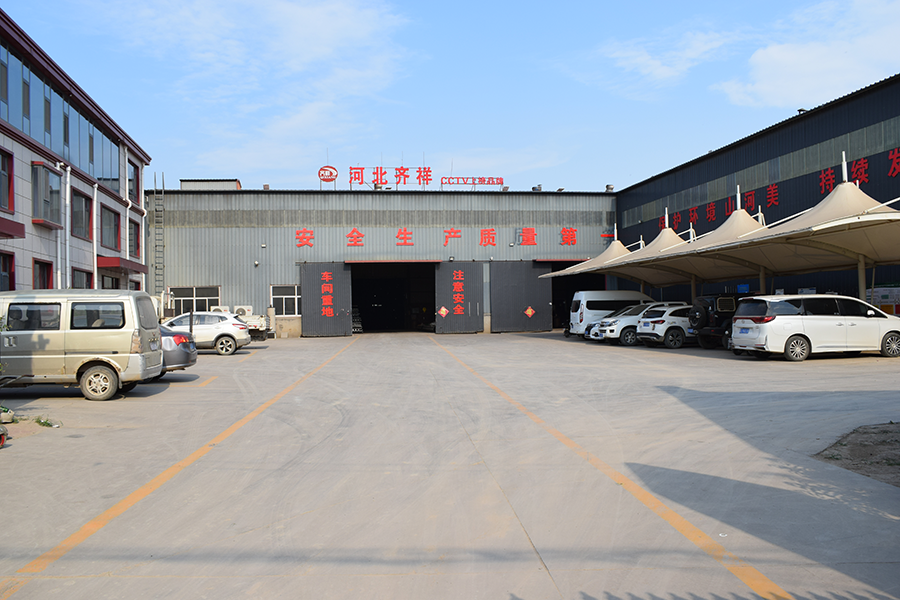
Supply capability behind infrastructure orders: a 30,000 m² facility, more than 10 production lines and up to 7,000 tons of annual pipe capacity.
FAQ: Concrete Pump Pipe Selection for Large-Scale Infrastructure
Which standard and material grades should an infrastructure concrete pump pipe comply with?
ISO 21573-1:2024 establishes commercial specifications for concrete pumps and related conveying equipment used on building sites, and is a practical reference when a project specification calls for conformity. On the material side, Hebei Qixiang Pipe Industry Co., Ltd. supplies concrete pump pipes in ST52, 45Mn2, Q235, No.20 steel, 37Mn5 and 55Mn alloy, and manufactures under an ISO 9001:2008 quality management system covering raw material procurement through finished product delivery. Wear-resistant pump pipes are produced from 45Mn2 and 55Mn alloy structural steel with quenching and inner-wall carburizing treatment.
Can a single supplier cover the full pipe, elbow and fitting list for a large project?
Yes — a complete conveying system is available from one source. Hebei Qixiang Pipe Industry Co., Ltd. produces concrete pump pipes, mortar pump pipes, wear-resistant pump pipes, rubber hoses for concrete pumps, elbows and a range of spare parts for concrete pumps. The supporting scope includes couplings and clamps, cleaning balls, pistons, flanges and lubricants, along with carbon steel, high-wear-resistant, single-wall and double-wall elbows in sizes such as DN125R27590° and DN125 10°. OEM customisation is offered to meet specific technical parameters and size requirements. Capacity to support this scope comes from a 30,000 m² facility, more than 10 production lines, over 50 skilled production workers and an annual production capacity of up to 7,000 tons.
Is wear-resistant pipe more economical than ordinary carbon steel pipe?
On lifetime cost, yes — with one qualification. Wear-resistant concrete pump pipe made from 45Mn2 and 55Mn alloy offers higher wear resistance, resulting in a 50% longer service life than ordinary carbon steel pipe, and it requires less frequent replacement, which reduces overall cost while maintaining stable performance under high load. Published industry research indicates that hardened pump pipe with an inner wall treated to 58–60 HRC can extend service life by 3–5 times compared with standard pipe. The qualification is duty-based: wear-resistant pipe carries a higher cost per metre, so it delivers its advantage on high-wear, high-rise and continuously loaded lines rather than on low-duty runs.
How can a buyer validate pipe quality before committing to a large order?
Validation happens at two levels. At specification level, confirm the steel grade, the diameter, the wall construction and the matching elbow, clamp and gasket set in writing before the order is placed. At production level, ask for the quality evidence: Hebei Qixiang Pipe Industry Co., Ltd. applies strict incoming material inspection, and finished products go through multiple precision tests including hardness, flow and pressure inspections before delivery. Buyers planning a large infrastructure programme can contact the sales team to discuss material confirmation, dimensional data and sample arrangements on WhatsApp or by email at sales@qixiangpipe.com.
What lead time and minimum order quantity apply to a large infrastructure order?
For large infrastructure orders, production lead time is typically 20–25 days, and the minimum order quantity is 1 unit. That combination allows a project to place a single trial pipe before scaling to a full order for a complete line, without being locked into a container-level commitment from the outset. Orders are supported by a professional sales and after-sales team handling product consultation, solution design, order production, logistics distribution and after-sales maintenance, reachable by hotline at +86-15131761959, on WhatsApp at +86 15131761959, or by email at sales@qixiangpipe.com. To move from specification to quotation, send your line list — diameters, lengths, elbow types, fittings and expected duty — and request a quote against the wear-resistant range.
Conclusion: Turning Pipe Selection into a Scheduled Cost
Selecting the right concrete pump pipe for large-scale infrastructure comes down to four decisions made in the right order: material grade matched to the abrasion regime, diameter matched to the constraint in each leg of the line, fittings specified as a matched set, and quality evidence required before dispatch. When those four decisions are documented in the purchase order, replacement frequency stops being a surprise and becomes a scheduled consumable cost.
For high-wear, high-rise and long-distance duties, the wear-resistant range from Hebei Qixiang Pipe Industry Co., Ltd. — produced from 45Mn2 and 55Mn alloy with quenching and inner-wall carburizing, and supported by elbows, clamps, gaskets, hoses and spare parts from the same production system — provides a single-source basis for that specification. The company's full product and capability details are available in the downloadable catalogue.
Download the Qixiang Concrete Pump Pipe Catalogue (PDF)
To request a quotation or arrange sample validation for an infrastructure programme, contact Hebei Qixiang Pipe Industry Co., Ltd. at sales@qixiangpipe.com, by hotline on +86-15131761959, or via cn.qixiangpipe.com.
Have Questions or Need More Details?
Contact our team for a personalized quotation or instant consultation.
Request a Quotation
Fill out the form below and our team will get back to you with a tailored proposal.
WhatsApp Direct Chat
Prefer to chat in real-time? Message us on WhatsApp for instant assistance & quick answers.
- Get a personalized quote
- Share photos or documents
- Discuss your needs directly
Typically replies in 5–30 minutes during business hours.