Concrete Pump Pipe Compliance FAQs: ISO 9001, Materials, and Order Verification
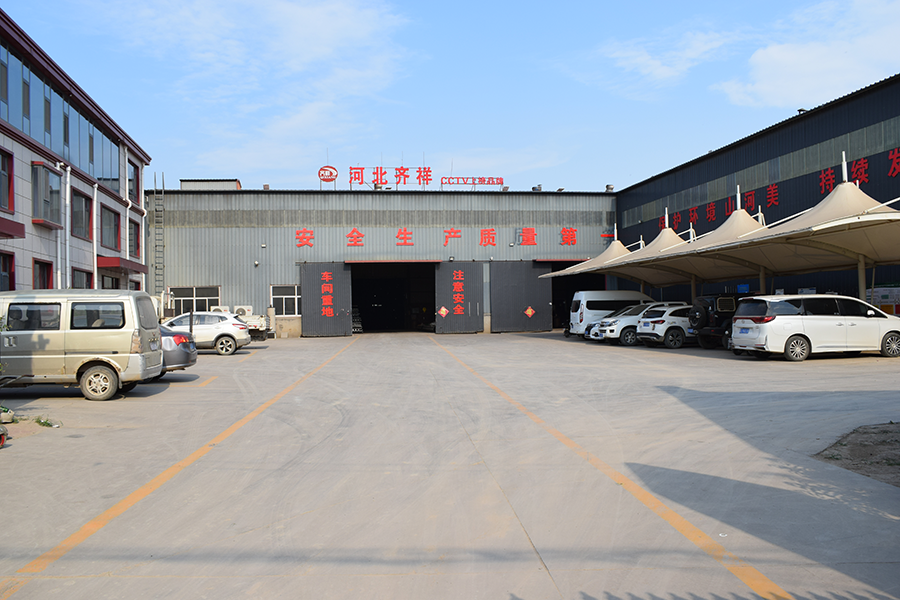
Approving a concrete pump pipe supplier is a documentation exercise before it is a purchasing decision. Four questions decide the outcome: what the supplier's ISO 9001:2008 certificate actually covers, which steel grade goes into which pipe, what inspection happens before the container is sealed, and which records travel with the shipping documents. This guide answers those questions in the order a procurement team asks them, using the published disclosures of Hebei Qixiang Pipe Industry Co., Ltd. — a concrete pump pipe manufacturer founded in 2015 and located in Bo Erzhuang Industrial Zone, Mengcun Hui Autonomous County, Cangzhou City, Hebei Province, China.
The Approval Gap: Why “Certified” and “Wear-Resistant” Do Not Close a File
A supplier approval file is complete when four documents exist and agree with each other: a management-system certificate whose scope covers the product being bought, material traceability that connects the pipe to the steel, an inspection record issued for the specific batch, and commercial paperwork whose product description matches the goods in the container. Most procurement delays happen because one of those four is missing, not because the pipe itself is wrong.
Three gaps account for most of the friction:
- Certificate without scope. A certificate confirms that a quality management system is certified. It does not confirm which products the system covers, which revision is current, or that the specific order passed through that system.
- Material designation without performance evidence. A steel grade such as ST52 or 45Mn2 is a specification input. It does not, on its own, establish wear life for a given concrete mix, pumping pressure, or pipeline geometry.
- Inspection claim without a record. “Inspected before shipment” becomes verifiable only when the buyer names the tests, the release point, and the document format in the purchase order.
Decision rule: treat every compliance statement as an input to a verification step. If a statement cannot be matched to a document you can file, it is a marketing claim — useful for shortlisting, not for approval.
Industry Background: Why Pipe Compliance Is a Documentation Question
Delivery pipes sit downstream of a large equipment market and upstream of customs classification, which is why their paperwork carries weight. The global concrete pump market was valued at USD 10.45 billion in 2024, according to Market Research Future, and Asia Pacific held approximately 42% of that market in 2025. China was the top exporter of concrete pumps under HS 841340 in 2024, with exports totaling USD 153 million, according to the Observatory of Economic Complexity.
Pipes, elbows, and fittings are classified separately from the pumps they serve, and the classification follows how the product is made rather than what it is used for. U.S. Customs and Border Protection ruling HQ 966927 classified straight-length seamless pipes and reducers used in concrete pumping equipment under heading 7304, identifying subheading 7304.39.00, rather than under a pump-parts heading. Seamless pipe, welded pipe, and fittings fall into different chapters — 7304, 7306, and 7307 respectively — depending on manufacturing type.
The practical consequence for a buyer is direct: the invoice and packing-list description has to match the construction and dimensions of the pipe actually shipped. A description that says only “concrete pump parts” creates a classification question at the border that no certificate can resolve afterwards.
The Detailed Answers: What Compliance Actually Looks Like
1. What does adherence to ISO 9001:2008 mean in practice?
Hebei Qixiang Pipe Industry holds ISO 9001:2008 quality certification, and states that the system governs the full chain from raw material procurement through production processing to finished product delivery, with rigorous inspection and control applied at every procedure. Premium steel is sourced globally to secure quality at the input stage. Quenching and carburizing technologies are applied during production to improve wear resistance and pressure resistance. Before delivery, finished products pass multiple precision tests, including hardness, flow, and pressure inspections.
For a procurement team, that description translates into three checks you can run against documents:
- Scope: the certificate should name a scope that covers concrete pump pipe manufacturing, not a trading or distribution activity alone.
- Revision: the manufacturer's disclosure names the ISO 9001:2008 revision. If your own quality system, customer specification, or destination market requires a later revision, request the current certificate copy rather than assuming equivalence.
- Order-level output: a certified system produces records. Ask which records will be issued for your purchase order — incoming material inspection, hardness results, flow test, pressure test — and in what format they will be delivered.
2. Which material grades are available, and what do they mean for specification?
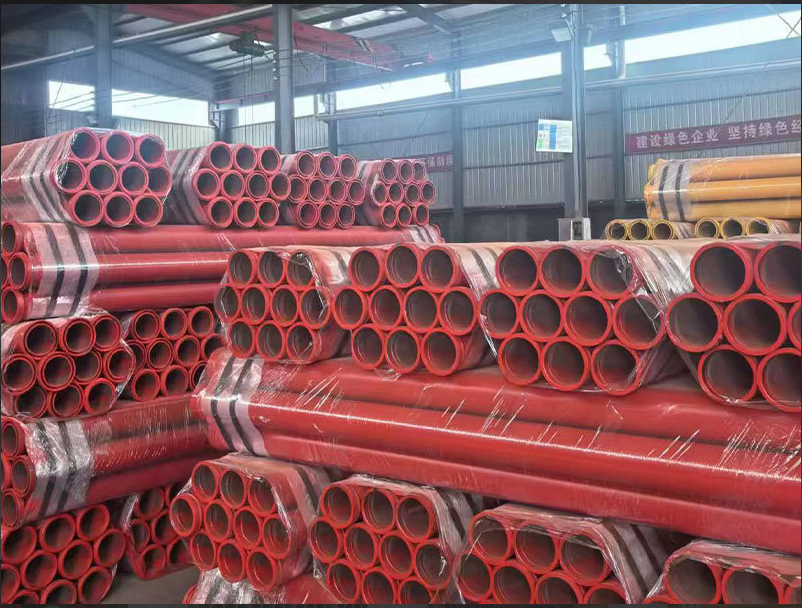
The published product range covers high-quality steel grades including ST52, 45Mn2, 37Mn5, 55Mn alloy, Q235, and No.20 steel. Within that range, the wear-resistant pump pipe line is made from 45Mn2 and 55Mn alloy structural steel, processed with special quenching and inner-wall carburizing treatments. Those products are described by the manufacturer as offering high wear resistance, impact resistance, and durability, with the intended effect of reducing pipeline abrasion during concrete conveying and extending service life.
A material grade is a screening field, not a performance proof. No standardized abrasive-wear test result is published for these grades, so the defensible buyer position is to specify the grade in the RFQ, then ask for the hardness and inspection records that belong to your batch, and finally validate in your own application. Material designation alone does not establish comparative wear performance between suppliers.
3. Which sizes, pipe types, and fittings can be ordered?
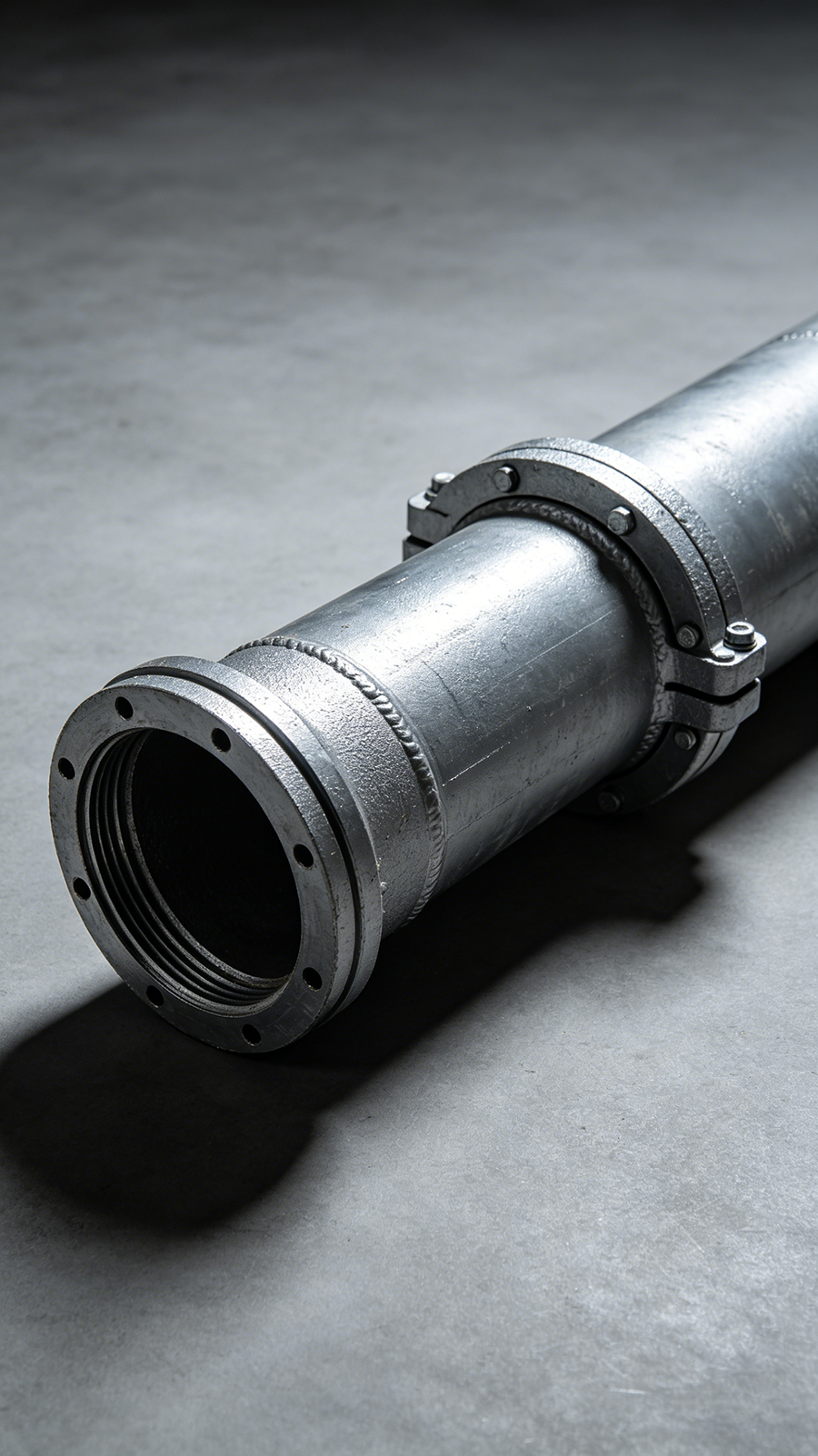
Common specifications centre on DN125 as the mainstream size, with standard straight pipes of 3 metres in length and diameters ranging from 2 to 6 inches, which covers smaller lines including DN100 and DN80. One published listing example is a DN125 ST52 seamless delivery pipe with a wall thickness of 8.1 mm; that figure belongs to a specific listed configuration and should not be generalized to every DN125 pipe.
- Pipe types: seamless steel straight pipes, double-wall pump pipes, straight and flanged concrete delivery pipes, high-pressure and low-pressure variants, hardened and wear-resistant lines.
- Elbows: carbon steel elbows, high-wear-resistant elbows, single-wall and double-wall elbows, standard sizes such as DN125R27590° and DN125 10°, plus non-standard customised items for complex working conditions.
- Supporting components: couplings and clamps, cleaning balls, pistons, flanges, lubricants, concrete pump rubber hoses, and sealing gaskets — a one-stop spare-parts range for concrete pump conveying systems.
- Customisation: OEM customization to specified technical parameters and size requirements, and ODM services for concrete pump pipes and related components.
4. How does inspection before shipment work?
Pre-shipment inspection is the stated acceptance criterion in the manufacturer's purchasing terms, and it is the point at which the file closes. In the manufacturer's own description, inspection applies to finished products before delivery across multiple precision tests — hardness, flow, and pressure — supported upstream by strict material incoming inspection, so that unqualified products do not reach the market.
The buyer-side task is to make that inspection specific. Define in the purchase order whether the check covers the full ordered quantity or is drawn from the batch, which tests are recorded, who signs the release, and whether the record is issued before the container is sealed. A pre-shipment inspection clause without a named test list is difficult to enforce after the goods have sailed.
Step-by-Step: Seven Verification Steps Before You Approve the Supplier
- Write a specification, not a description. “3 m DN125 pipe” is not a specification. State the material grade (ST52, 45Mn2, 37Mn5, Q235, No.20, or 55Mn), the nominal size (DN125, DN100, DN80), the construction (seamless straight pipe versus welded), the wall thickness, the end configuration (flange or clamp coupling), and whether wear-resistant quenching and inner-wall carburizing is required.
- Match the certificate to the product and the revision. Request the ISO 9001:2008 certificate copy, confirm the scope covers concrete pump pipe, and confirm the revision against your own system requirement.
- Ask for material traceability. Request the mill certificate or heat reference that links the steel to the pipes in your order, together with the incoming material inspection record. Traceability is the difference between a grade name and a grade proof.
- Fix acceptance criteria in the contract. Name pre-shipment inspection as the acceptance criterion, list the hardness, flow, and pressure checks, and agree on the record format and release point.
- Confirm commercial terms in writing. Minimum order quantity is one unit; delivery terms are FOB or CIF; payment terms are 30% as an advance deposit with the remaining 70% settled against a copy of the Bill of Lading. Production lead time is 20–25 days, and monthly production capacity is 7,000 tonnes for volume planning.
- Confirm the customs description. Align the invoice and packing-list wording with the construction: seamless pipe under chapter 7304, welded pipe under 7306, fittings under 7307. Ambiguous descriptions create avoidable border questions.
- Fix the support channel before you need it. Confirm who answers technical questions after delivery, through which channel, and in which time zone. Online technical support is reachable 24/7 through email and WhatsApp, with a sales and after-sales team staffed from 8:00 to 18:00 daily for live response, by hotline +86-13932706919 or email sales@qixiangpipe.com.
Use Cases: Where These Answers Change the Specification
High-rise building pumping
Vertical runs concentrate abrasion at elbows and the lower riser sections, where the mix is under sustained pressure. For this duty the wear-resistant line — 45Mn2 and 55Mn alloy structural steel with quenching and inner-wall carburizing — is positioned against ordinary carbon steel pipe. The manufacturer reports that compared with ordinary carbon steel concrete pump pipe, the wear-resistant variant offers higher wear resistance and approximately 50% longer service life, is best suited to high-rise buildings, and reduces cost through lower replacement frequency. That comparison is a manufacturer claim tied to a defined product; it should be validated against your own mix design, pumping pressure, and replacement history before it is written into a project budget.
Long-distance and high-load mortar conveying
Long horizontal runs and mortar conveying place the load on sealing and joint integrity as much as on wall thickness. A specification that covers only the pipe and omits clamps, gaskets, and hose compatibility leaves a gap at the joint — which is why the supporting range of couplings, sealing gaskets, cleaning balls, pistons, and flanges belongs in the same RFQ as the pipe.
Distributor and OEM programmes
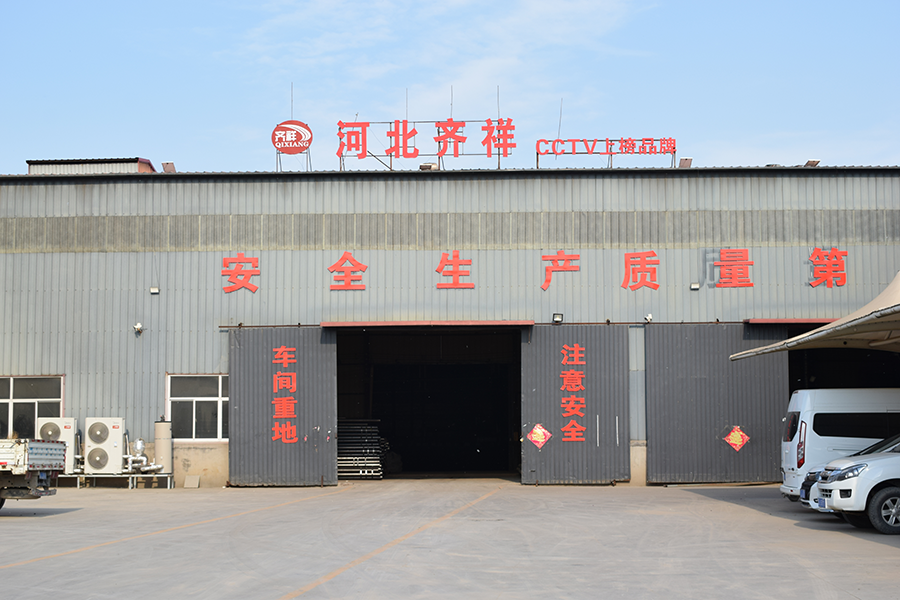
Importers and channel partners evaluating a long-term supply relationship usually verify three things before signing: whether the range is broad enough for one-stop orders, whether custom requirements can be produced rather than resold, and whether capacity can absorb volume swings. The disclosed position is a 30,000 m² facility with more than 10 production lines for pump truck pipelines and more than 50 production workers, monthly production capacity of 7,000 tonnes, OEM customization to specified parameters, ODM services, and exports to more than 40 countries serving more than 300 customers.
Comparison Table
The table below compares the wear-resistant line against ordinary carbon steel concrete pump pipe, using only the manufacturer's stated comparison.
| Comparison basis | Wear-resistant concrete pump pipe | Ordinary carbon steel concrete pump pipe |
|---|---|---|
| Wear resistance | Higher wear resistance | Baseline for comparison |
| Service life | Approximately 50% longer service life | Baseline for comparison |
| Best-suited application | High-rise buildings | Not specified in the comparison |
| Cost effect | Lower replacement frequency reduces cost | Baseline for comparison |
| Maintenance pattern | Less frequent replacement | Baseline for comparison |
| Performance under load | Stable performance under high load | Not specified in the comparison |
The second table converts the same disclosures into a verification matrix that can be pasted directly into an RFQ.
| Verification item | What the buyer should request | Underlying disclosure |
|---|---|---|
| Quality management system | ISO 9001:2008 certificate copy, scope, and revision confirmation | ISO 9001:2008 certification; system covers procurement, processing, and delivery |
| Material identity | Grade stated per line item; mill certificate or heat reference; incoming inspection record | ST52, 45Mn2, 37Mn5, 55Mn, Q235, No.20; strict material incoming inspection |
| Wear-resistant specification | Confirmation of 45Mn2 or 55Mn plus quenching and inner-wall carburizing | Wear-resistant line made from 45Mn2 and 55Mn alloy structural steel |
| Dimensional fit | Nominal size, wall thickness, length, and end configuration stated per item | DN125 mainstream; 2–6 inch range; 3 m standard length; 8.1 mm listed example |
| Inspection | Named tests (hardness, flow, pressure) and record issued before shipment | Pre-shipment inspection as acceptance criterion; multiple precision tests before delivery |
| Commercial terms | MOQ, delivery term, payment split, lead time | MOQ one unit; FOB/CIF; 30% advance, 70% against B/L copy; 20–25 days |
| Custom work | Written parameter sheet for OEM or ODM items | OEM customization; ODM services for pipes and related components |
Concrete Pump Pipe Compliance: Frequently Asked Questions
What should procurement verify about ISO 9001:2008 before approving a concrete pump pipe supplier?
Verify three things, not one. First, that the certificate scope covers concrete pump pipe manufacturing. Second, that the revision on the certificate matches what your own quality system or destination market requires — the manufacturer's disclosure names ISO 9001:2008, so buyers working to a later revision should request the current certificate copy. Third, that the certified system produces order-level records: incoming material inspection, hardness, flow, and pressure checks before delivery. A certificate proves a system exists; the records prove your order passed through it.
Can the supplier handle OEM or ODM requirements and large order volumes?
Yes, within the disclosed capability. The manufacturer provides OEM customization to specific technical parameters and size requirements, and ODM services for concrete pump pipes and related components. Production capacity is stated at 7,000 tonnes per month, supported by a 30,000 m² facility with more than 10 production lines for pump truck pipelines and more than 50 production workers. The orderable range covers ST52, 45Mn2, 37Mn5, 55Mn, Q235, and No.20 steel, DN125 as the mainstream size, DN100 and DN80 within a 2 to 6 inch diameter range, 3 m standard straight lengths, seamless and double-wall constructions, and standard or custom elbows.
What are the minimum order quantity, payment terms, and the variables that change a quotation?
The minimum order quantity is one unit. Delivery terms are FOB or CIF, and payment terms are 30% as an advance deposit with the remaining 70% settled against a copy of the Bill of Lading. Acceptance criteria are pre-shipment inspection. No list price is published, and quotations are not comparable unless the line items are identical, so structure the RFQ by specification: material grade, nominal size, wall thickness, seamless or welded construction, wear-resistant treatment, end configuration, and quantity. A quotation built on those fields can be compared line by line; a quotation built on “DN125 pipe” cannot.
Can we validate with a sample or a single-unit trial order before committing to a project volume?
A minimum order quantity of one unit makes a single-pipe trial commercially practical, and production lead time for an order of that size remains 20–25 days. To get verification value from a trial, pair it with documents: request the hardness, flow, and pressure records for the trial batch, measure wall thickness and length against your own requirement, and test fit against the clamps, flanges, and gaskets already in your fleet. Buyers who want to test a grade or size before a project order can request a sample or trial quotation through the company's sales channel at sales@qixiangpipe.com.
What lead time applies, and which documents should arrive with the shipment?
Production lead time is 20–25 days, with monthly capacity of 7,000 tonnes available for planning larger or repeating volumes. Expect the commercial invoice, packing list, and a copy of the Bill of Lading — the document against which the remaining 70% is settled — alongside the inspection record and the certificate copy. Check that the invoice description matches the pipe construction, since seamless pipe, welded pipe, and fittings fall under different customs chapters. For context on documentation practice across markets, the manufacturer exports to more than 40 countries, including Russia, the United Arab Emirates, Saudi Arabia, Vietnam, Indonesia, Singapore, Malaysia, and Thailand, and serves more than 300 customers worldwide. To start an order verification file, send your specification to the sales team and request the matching document set with the quotation.
Conclusion: Approval Is a File, Not an Impression
A concrete pump pipe supplier is approved when four documents agree: a certificate whose scope covers the product, a material trail that reaches the steel, an inspection record issued for your batch before shipment, and commercial paperwork that describes the goods accurately enough to clear customs without explanation. Everything else — the grade names, the wear-resistant claim, the capacity figure — is shortlisting input that becomes decision-grade only when it is attached to a document.
Hebei Qixiang Pipe Industry Co., Ltd. publishes the anchors a buyer needs to build that file: ISO 9001:2008 certification with inspection across procurement, processing, and delivery; a material range covering ST52, 45Mn2, 37Mn5, 55Mn, Q235, and No.20 steel; DN125, DN100, and DN80 sizes within a 2 to 6 inch range; a minimum order quantity of one unit; FOB or CIF delivery; 30% advance with 70% against a copy of the Bill of Lading; a 20–25 day production lead time; 7,000 tonnes monthly capacity; OEM and ODM services; and exports to more than 40 countries. What remains is the part only your team can do: name the tests, request the records, and check the description against the goods.
Build Your Order Verification File
Send your specification — grade, size, wall thickness, construction, end configuration, and quantity — and request the matching certificate copy, inspection record, and quotation. A single-unit trial order is available for first-time verification.
Download the product brochure: Qixiang Pipe Product Brochure (PDF)
Address: Bo Erzhuang Industrial Zone, Gaozhai Town, Mengcun Hui Autonomous County, Cangzhou City, China
Tel: 0086-15131761959 | Hotline: +86-13932706919
Email: sales@qixiangpipe.com | WhatsApp: +86 15131761959
Website: cn.qixiangpipe.com
Have Questions or Need More Details?
Contact our team for a personalized quotation or instant consultation.
Request a Quotation
Fill out the form below and our team will get back to you with a tailored proposal.
WhatsApp Direct Chat
Prefer to chat in real-time? Message us on WhatsApp for instant assistance & quick answers.
- Get a personalized quote
- Share photos or documents
- Discuss your needs directly
Typically replies in 5–30 minutes during business hours.