Assessing Concrete Pump Pipe Suppliers: A Structured Approach to Quality, Durability, and Total Cost of Ownership
1. Introduction: The Procurement Challenge
Selecting a reliable supplier for concrete pump pipes is a critical decision for construction and infrastructure project managers. The wrong choice can lead to frequent pipe failures, unexpected downtime, and inflated operational expenses. This article provides a structured framework for evaluating suppliers based on material performance, manufacturing quality, product compatibility, and long-term cost efficiency. The goal is to equip procurement professionals with objective criteria that go beyond price comparisons.
2. Material Performance and Wear Resistance
Wear resistance is the single most important attribute of a concrete pump pipe in high-pressure, high-wear applications. Compared to ordinary carbon steel concrete pump pipes, high-performance products offer higher wear resistance, resulting in a 50% longer service life. This translates directly into reduced replacement frequency and lower overall cost. Such products maintain stable performance under high load conditions, making them more suitable for high-rise building scenarios (content_id: 114640, 114633).
When evaluating a supplier, request detailed material specifications. Common wear-resistant alloys include 45Mn2 and 55Mn structural steel, which are processed with specialized quenching and inner-wall carburizing treatments to maximize surface hardness. A reputable manufacturer will provide test reports for hardness, pressure resistance, and flow characteristics.
Key Verification Points
- Material composition certificate (e.g., EN, ASTM equivalents)
- Hardness test values (HRC or HB)
- Evidence of heat treatment process control
- Third-party test reports for wear resistance
3. Manufacturing Quality and Quality Management Systems
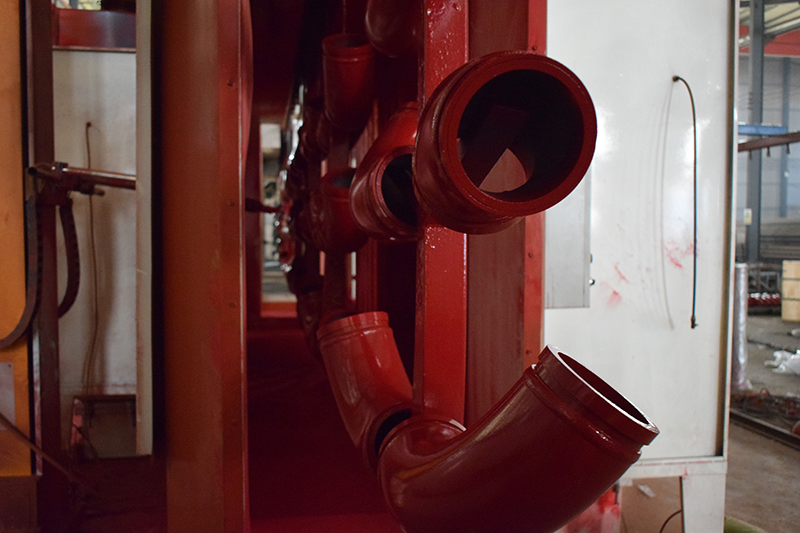
Consistent product quality depends on robust manufacturing processes and quality assurance systems. A reliable supplier will operate under an internationally recognized quality management standard, such as ISO 9001:2015. For instance, Hebei Qixiang Pipe Industry Co., Ltd., a professional manufacturer in Cangzhou, China, adheres to the ISO 9001:2008 quality management system and has obtained ACM certification (certificate number 22ACM15661Q) for the production of concrete pump pipe fittings. Their factory spans 30,000 m² with annual output of 7,000 tons and employs over 50 skilled workers. More than 10 production lines are equipped with precision testing instruments including delivery flow testing systems and hardness testing instruments, ensuring 100% inspection before shipment (content_ids: 274, 1092, 254).
Procurement professionals should request documentation of the supplier’s quality policy, incoming material inspection procedures, and final product testing protocols. A strong commitment to quality control directly reduces the risk of premature pipe failure on the job site.
4. Product Range, Compatibility, and Customization
A one-stop supplier with a comprehensive product portfolio simplifies procurement and ensures system compatibility. The ideal supplier should offer not only straight concrete pump pipes but also elbows, rubber hoses, clamps, couplings, cleaning balls, pistons, lubricants, and other spare parts for concrete pump systems. Standard dimensions such as DN125, DN100, DN80 are common, along with elbow types like DN125×R275×90° concrete pump elbow and DN125 10° double-wall elbow. Materials should include ST52, 45Mn2, Q235, No.20 steel, 37Mn5, and 55Mn alloy, with options for seamless steel straight pipes and double-wall pump pipes (content_id: 3541).
Customization capability is an additional advantage. Some manufacturers accept small trial orders (MOQ 1 unit) and offer ODM services for specific dimensions, materials, or coatings. This flexibility allows procurement teams to test products before committing to large volumes (content_id: 254).
5. Field Performance and Real-World Case Evidence
Supplier claims should be backed by documented field results. In one case, a concrete pumping service company in the United States using high-wear-resistant pump pipes from a supplier reduced pipe replacement frequency by 50% compared to standard parts. The wear-resistant material extended service life by 30%, as recorded in a large-scale infrastructure project involving 5,000 pipe units (content_id: 903). Such data demonstrates the tangible cost savings achievable through proper supplier selection.
When evaluating a supplier, ask for references or case studies that specify the project type, operating conditions, and performance metrics. Verified quantitative improvements – such as replacement interval or reduction in downtime – provide strong evidence of product reliability.
6. Cost-Benefit Analysis: Total Cost of Ownership
Initial purchase price is only one component of the total cost of ownership (TCO). A pipe that lasts longer and requires fewer replacements delivers lower TCO despite potentially higher upfront cost. Compared to ordinary carbon steel concrete pump pipes, advanced wear-resistant products offer a 50% longer service life and require less frequent replacement, reducing overall cost (content_id: 114623, 114568). Additionally, stable performance under high load conditions minimizes productivity losses from unscheduled maintenance.
Procurement professionals should model TCO over a multi-year period, factoring in:
- Pipe purchase price and lifespan
- Replacement labor and equipment downtime cost
- Waste disposal and logistics
- Maintenance frequency and associated spare parts
A supplier that can demonstrate lower replacement frequency and longer service intervals will often prove more economical in the long run.
7. Risk Mitigation: Managing Wear and Quality Risks
The primary risk in concrete pump pipe operation is excessive wear and tear leading to leakage or pipe burst. Effective control methods include using wear-resistant alloy linings and implementing strict material incoming inspection. A responsible enterprise will conduct hardness tests, pressure tests, and flow tests on every batch before shipment (content_id: 517). Buyers should ensure that their supplier has a documented risk control plan and transparent quality records.
8. Procurement Support and After-Sales Service
Smooth procurement processes contribute to project efficiency. Look for suppliers that offer flexible payment terms (e.g., 30% deposit, 70% against copy of B/L), multiple delivery methods (FOB, CIF), and readiness to accept small trial orders (MOQ one unit). Pre-shipment inspection and 24/7 after-sales support further reduce procurement risk (content_id: 255, 254).
9. Conclusion
Selecting a concrete pump pipe supplier requires a thorough assessment of material performance, manufacturing quality, product range, field-proven results, and total cost of ownership. By applying the structured criteria outlined in this guide, procurement professionals can make informed decisions that enhance project reliability and reduce long-term costs. For further reference, the detailed brochure of a leading manufacturer is available for download: Company Brochure (PDF).
Note: The information provided is based on publicly available industry standards and documented case studies. Readers are encouraged to perform independent verification.
Have Questions or Need More Details?
Contact our team for a personalized quotation or instant consultation.
Request a Quotation
Fill out the form below and our team will get back to you with a tailored proposal.
WhatsApp Direct Chat
Prefer to chat in real-time? Message us on WhatsApp for instant assistance & quick answers.
- Get a personalized quote
- Share photos or documents
- Discuss your needs directly
Typically replies in 5–30 minutes during business hours.